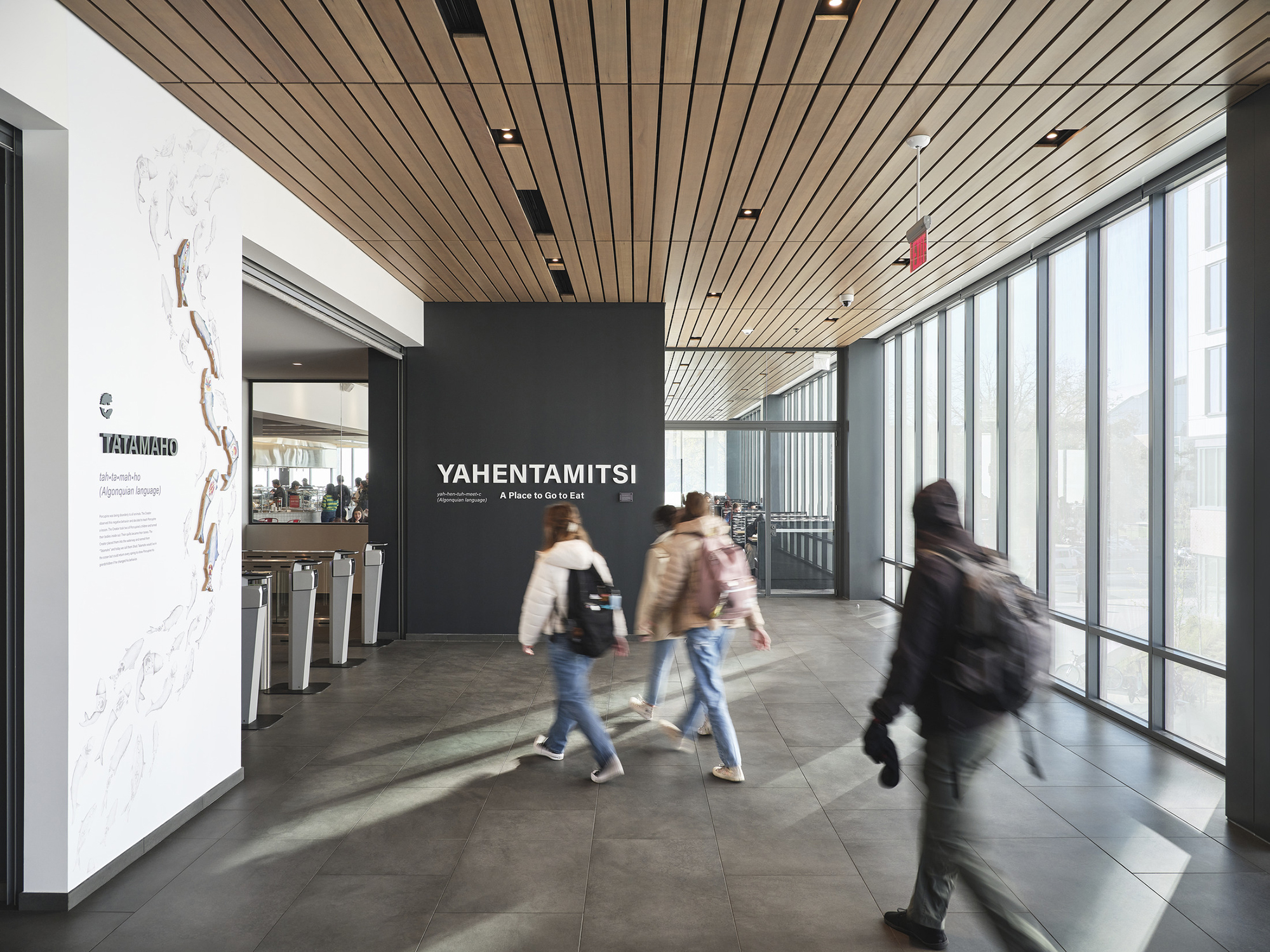
When it comes to the built environment, few spaces carry as much responsibility and opportunity as a visitor center. These gateway spaces are often transitional, positioned between arrival and the main destination. Yet they are among the most powerful environments for storytelling, brand expression, and first impressions.
A visitor center is more than a space. It is an institution’s opening chapter and often its most enduring memory. In partnering with mission-driven institutions to design visitor experiences that are inclusive, adaptable, and distinctly expressive of purpose, we have learned that thoughtful branded experiences succeed on three driving principles: authenticity, mission alignment, and a celebration of place.
Authenticity
At the heart of every institution is a story. Whether it’s a university’s history, a museum’s values, or a community’s spirit, these narratives can be integrated into physical spaces through design choices that foster an authentic experience and allow users to feel more connected.
Throughout the design process, our team works closely with client leadership and staff, community members, visitors, and other stakeholders to learn about each site’s history and heritage, along with its goals and aspirations. Through inclusive workshops and visioning sessions, we identify stories, symbols, shared values, and points of resonance that can be incorporated into the design. This shared approach builds a strong foundation for informed decision-making as the project moves forward.
Color, texture, lighting, materials, messaging, and spatial sequencing become storytelling tools. Experiential graphics, curated imagery and interpretive moments can educate, inspire, and instill pride. When thoughtfully integrated, these elements ensure the environment feels genuine rather than applied.
After working on the campus master plan for the University of North Texas’s new Frisco branch campus, our team designed Frisco Landing, a new flagship building that acts as a gateway to the UNT experience. Setting the stage for a dynamic, student-centered learning environment, the building merges UNT’s identity with a creative, forward-thinking approach to education. Bold experiential branding and wayfinding welcomes students, fosters engagement, and instills a strong sense of university pride.
The building’s design incorporates the eagle mascot and flight-related themes to build a strong sense of campus identity. Upon entering the space, students are greeted by a rotating wall of alumni portraits showcasing the number of possibilities for graduate students.
Green privacy graphics are applied on glass study rooms throughout the building, featuring a line work image symbolizing wind and movement to represent students’ momentum as they work through their goals. A lenticular art display and interactive fidget wall add vibrancy invite exploration and engagement. The result is not just a branded space, but a living expression of UNT’s commitment to innovation, inclusion, and student success.
Welcome
Visitor centers serve diverse audiences, each arriving with different motivations and expectations. Designing truly welcoming spaces begins with understanding who these audiences are through rigorous research, data-informed planning, and robust stakeholder engagement. Our firm takes a “one voice” approach, bringing together students, faculty, staff, donors, community members, visitors, and anyone else who will be using the space, to ensure shared ownership and vision. In addition to informing space program, this process builds trust, ensuring the visitor center reflects the lived experiences of its broader community.
At the University of Arizona, our team designed the Scottsdale Center to be a campus “embassy,” welcoming prospective students, alumni, faculty, and community leaders while reflecting the university’s land-grant mission and statewide impact. The space serves multiple roles: a first impression for prospective students and families, a venue for alumni and donor events, a professional environment for advising and outreach, and a flexible setting for showcasing academic research, athletics, and innovation. Above all, it is designed to extend the university’s reach – meeting its community where they are and inviting them into the broader Wildcat story.
To meet all these needs, the center is designed to flex seamlessly between everyday use and special moments. Experiential design elements provide both orientation and invitation, with a three-dimensional topographic relief of Arizona to give geographic context, and a custom picture flap wall and other imagery sharing university achievements related to academics, research, athletics, and the arts. Through materiality, graphics, and program, the center reinforces a longstanding commitment to education, research, and service while forging new connections.
Mission Alignment
Branded environments should be a physical manifestation of an institution’s mission — demonstrating that values are not simply written statements, but principles actively lived out. Every element — whether structural or decorative — should be intentionally designed to serve a purpose. Spatial layouts can encourage interaction and belonging. Materials and daylighting strategies should convey warmth and openness. Clear sightlines and intuitive circulation can reduce stress and promote ease of use.
Universal design principles are fundamental. Clear signage, accessible pathways, inclusive furnishings, and sensory considerations ensure that every visitor — regardless of ability — can navigate and enjoy the space. When done well, visitor centers foster community, enhance safety, and strengthen quality of life.
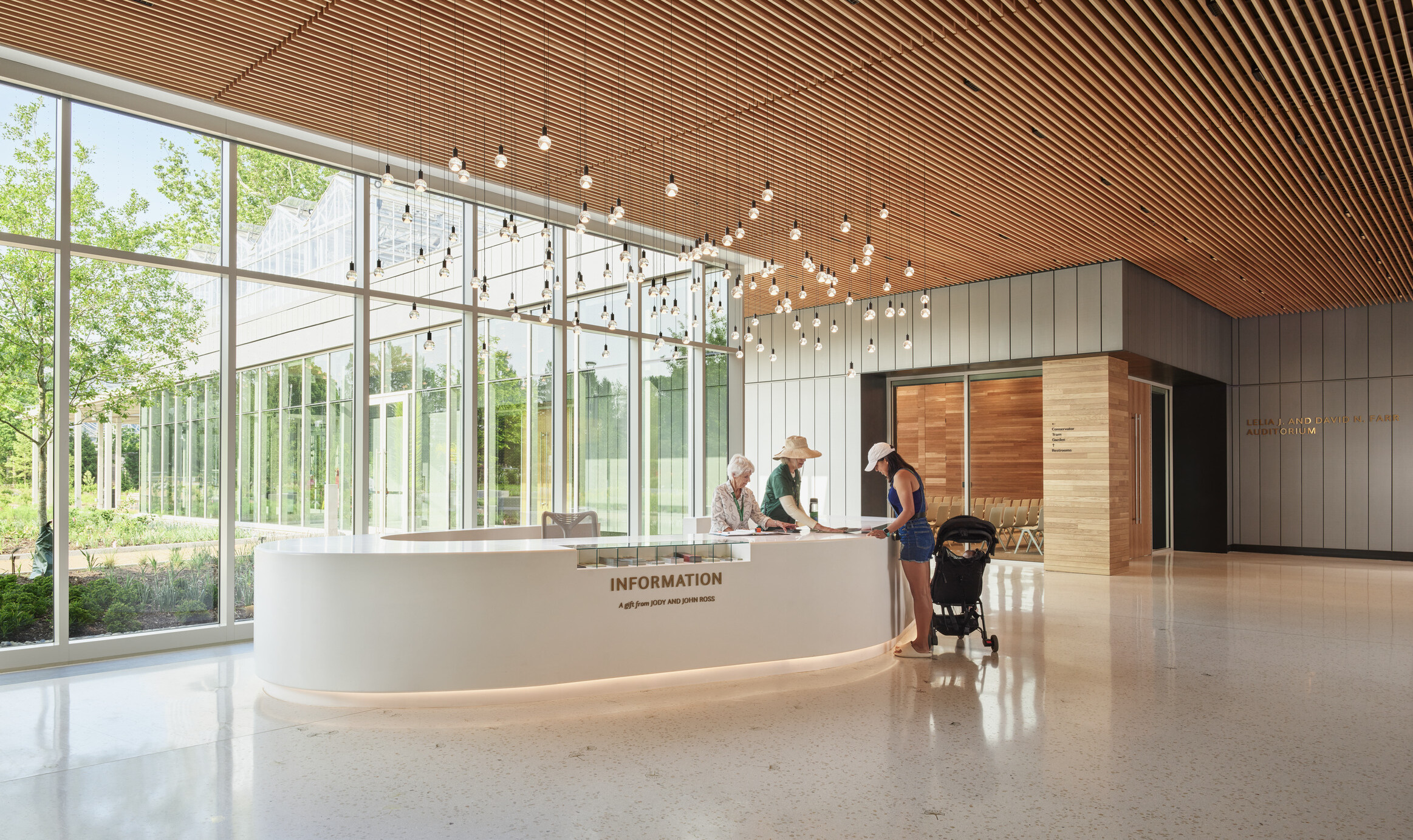
At the Missouri Botanical Garden, our team designed the Jack C. Taylor Visitor Center to express the Garden’s mission “to discover and share knowledge about plants and their environment, in order to preserve and enrich life.” Every aspect of the visitor center is planned to immerse users in the garden experience, including its transparent south façade that maximizes visual connections to the landscape.
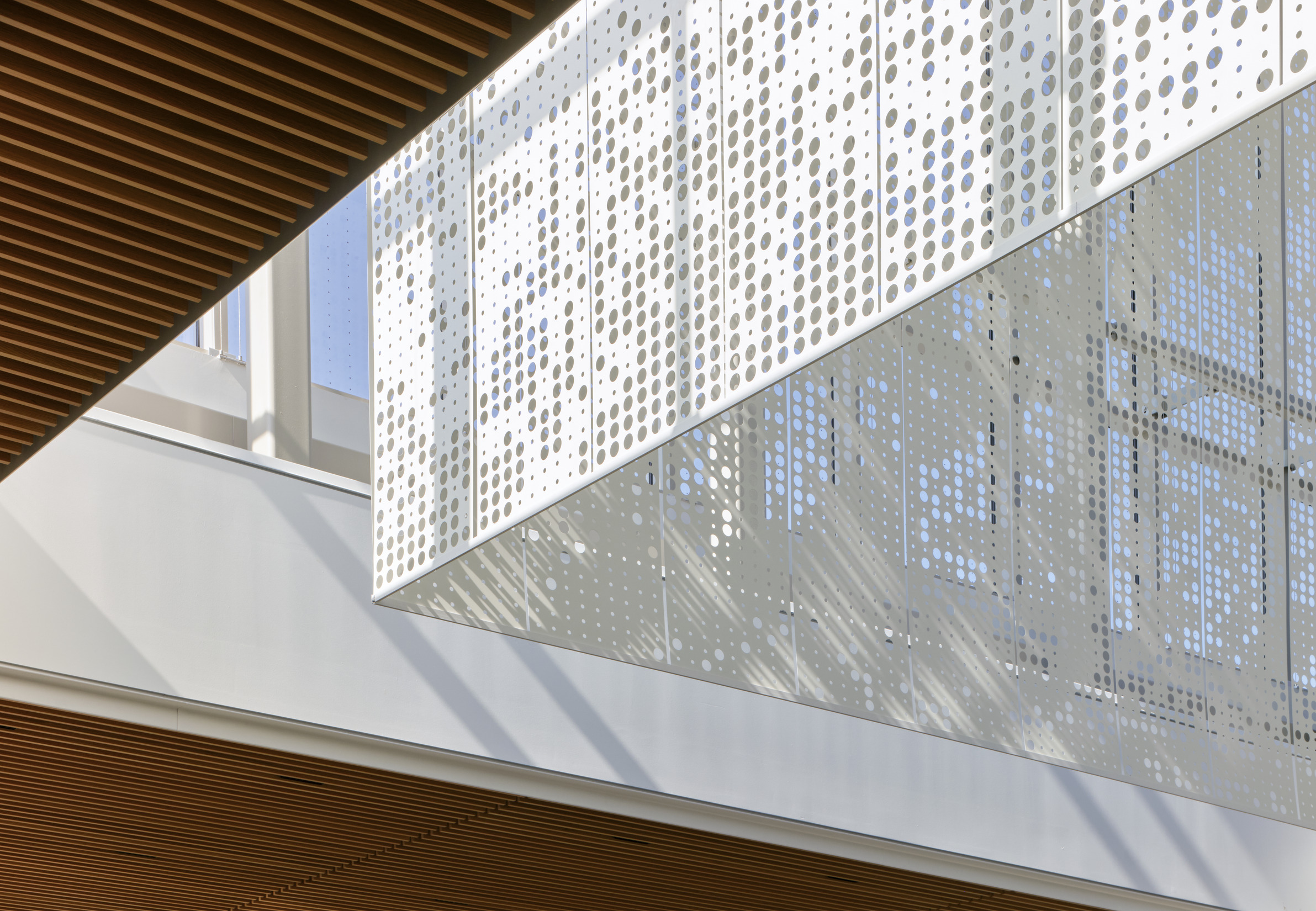
Interior biophilic details include a custom-designed scrim that filters dappled light to evoke the feeling of entering a clearing in the woods, terrazzo flooring that includes inlays of local river rock and brass leaves representing the native Missouri woodland, and furniture inspired by the shapes of rounded rocks and pebbles. These details highlight local plant species, celebrate the Garden’s history, and replicate moments in nature, reinforcing the Garden’s mission with an immersive and memorable experience.
Celebrating Place
The most resonant visitor centers are grounded in context, meeting community needs and incorporating local materials and perspectives. They also respond to the characteristics of the site by strengthening connections to surrounding streets, landscapes, and communities while reinforcing natural sightlines and pedestrian pathways.
The Jack C. Taylor Visitor Center seamlessly intertwines architecture and landscape, enabling a new gateway experience that immerses visitors in the garden as soon as they arrive. Visitors first pass through the historic stone garden wall into a new north garden that includes gently sloping paths, generous terraces, and Missouri-native limestone to reflect the Garden’s longevity. Inside, the lobby axis is centered on garden paths and fountains, providing an immediate sense of place while showcasing a historic Gingko tree.
Rather than upstaging the existing gardens, the visitor center is designed to showcase and highlight the beauty that already exists. This celebration of place deepens the visitor experience, while building pride and appreciation for the building’s natural surroundings.
A Lasting Impression
At Ayers Saint Gross, we see every visitor center as an opportunity — not simply to introduce a campus or institution, but to celebrate what makes it distinctive and to create spaces where stories begin. When these gateway experiences prioritize authenticity, engagement, and mission alignment, they do more than welcome guests. They create lasting impressions, strengthen institutional identity, and build meaningful connections that keep visitors coming back.
Michelle Kollmann is a principal and interior studio leader, working out of our Tempe office. Mindy Dunn is a graphic designer who specializes in experiential design.