

Ideas / Project Stories / 2.11.2026

Context as Catalyst: Reimagining Durham Hall at Arizona State University

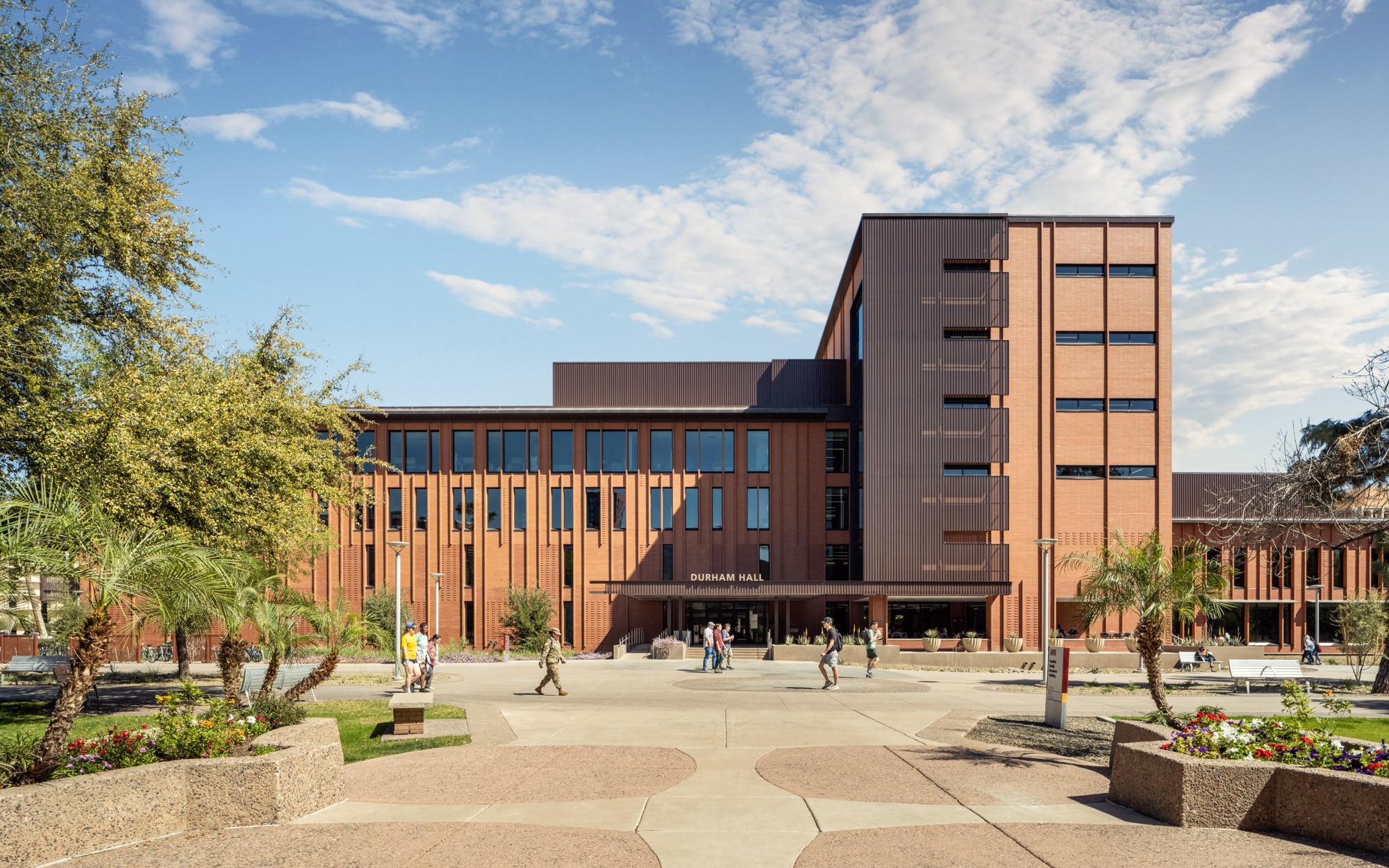
The West Elevation of Durham Hall at Arizona State University

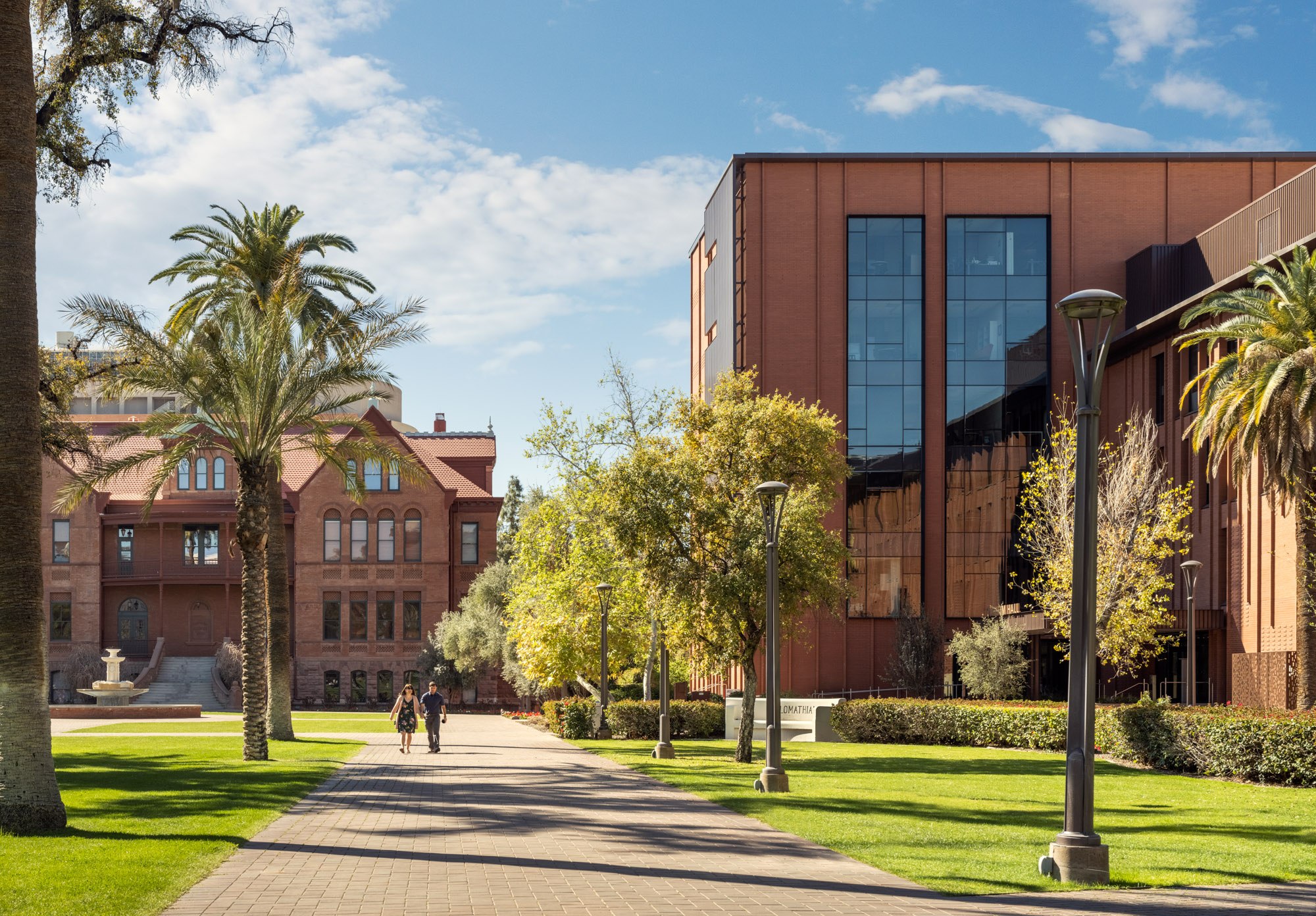
Durham Hall is located on a prominent site on Arizona State University’s Tempe campus where the historic and modern campus intersect, and this is apparent in the multiple different architectural expressions by the site. While programming and designing an extensive modernization of the building, Ayers Saint Gross designers used contextual clues to get a final product that both felt like it belonged but was also forward-looking and original. In recladding the building, the design team sought to bridge adjacent historic, mid-century, and contemporary buildings and landscape to create a unique gateway experience. 

Contextual design can easily become a buzzword in the world of architecture, so it is important to get specific. When placemaking on a campus, the first step is to absorb the surroundings and draw out what is associated with the space (colors, materials, movement, and memorable moments). Then you can make something new. Though not a very common material more broadly in Arizona, the buildings on the Alumni Lawn, including the historic and iconic Old Main, all use brick. This made brick a natural starting point for the recladding. 

An aerial image of Durham Hall at Arizona State University with the surrounding campus context

The team recognized that buildings from different eras each had their versions of brick use — different colors, sizes, and applications. Upon closer look, Old Main, in particular, reveals thoughtful use of brick with different sizes and shades of the material. Recognizing these possibilities gave a level of freedom to creatively approach a contextual design and build on the identity established in the precinct. 

North elevation of tower facing south towards Old Main on Alumni Lawn at Arizona State University

Bricks contain multitudes of playful and evocative design possibilities beyond just being stacked in a standard pattern. There is a dimensional quality. Old Main showed how different sizes, shapes, and colors can be evocative. With Durham Hall, the team explored how bricks can be turned and how patterns can be created, stacked, and repeated. Working with the repetitive elements inherent in the material opened the door to new ways of reinterpreting the building’s context. 

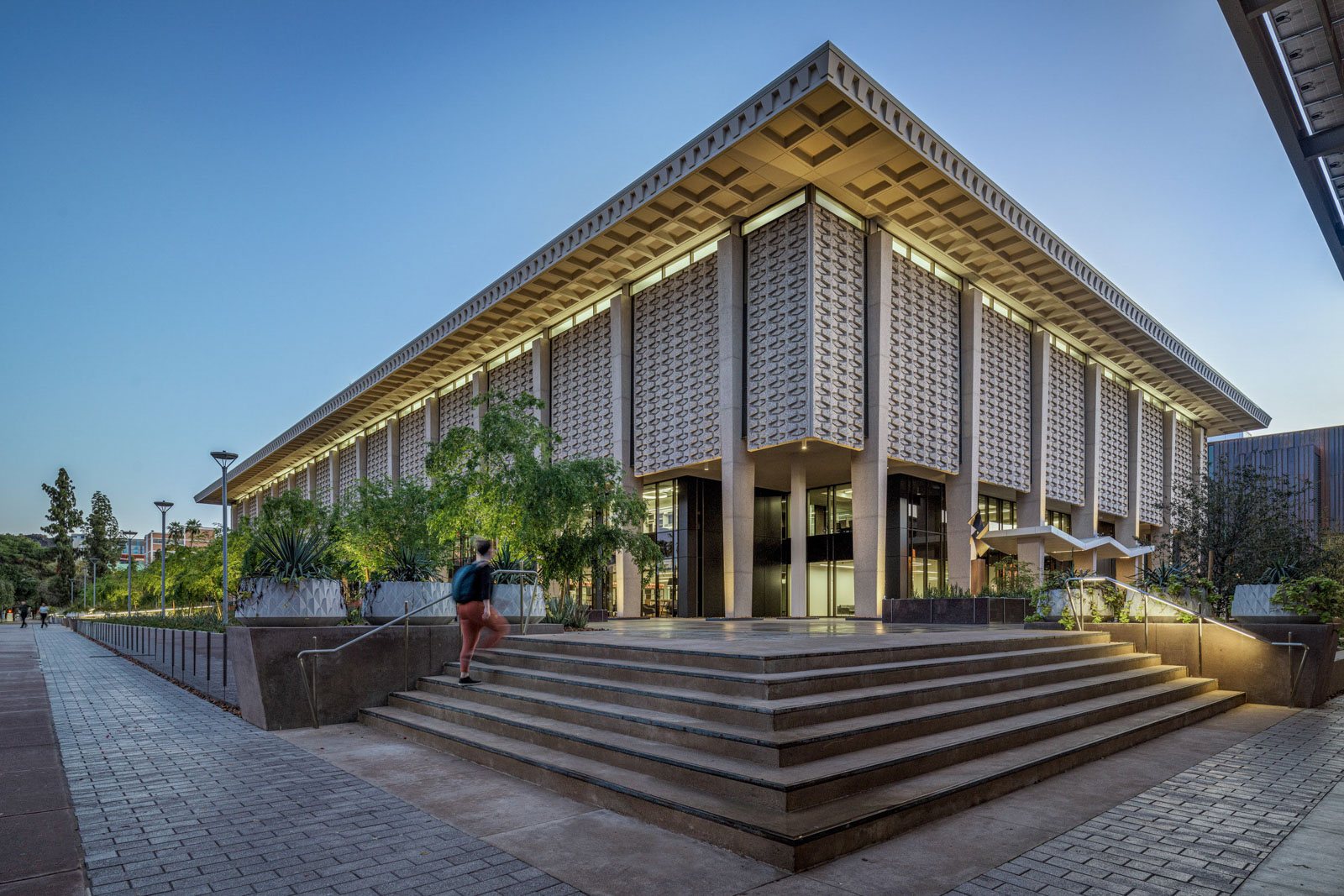
Arizona State University Durham Hall renovation south elevation
Arizona State University Durham Hall roof corner

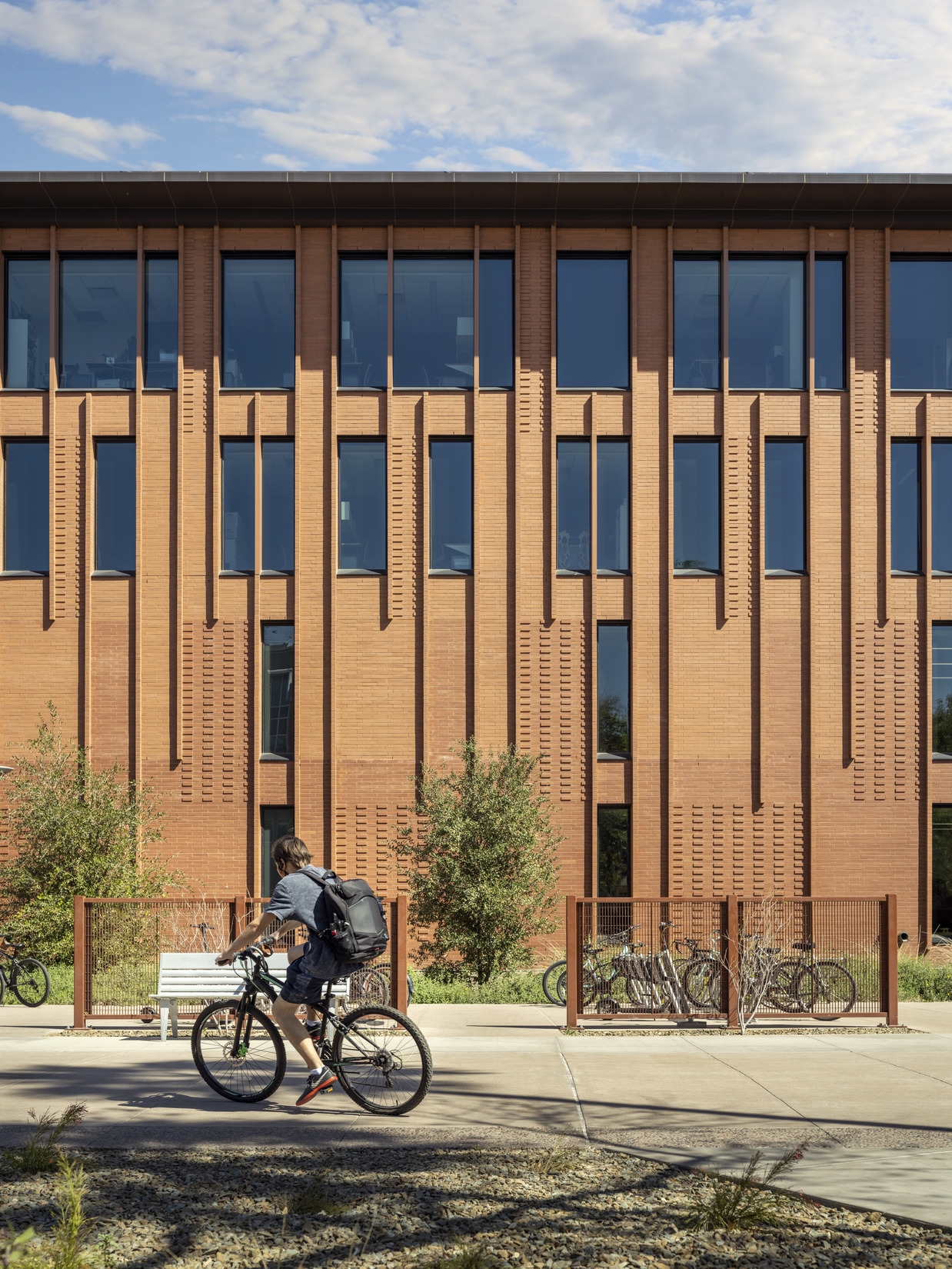
The recladding was designed and built bay by bay, and different sized bricks were used and combined. The primary face brick is an engineer norman brick, selected to reflect the size of the brick used on Old Main. An engineer modular brick was used to create series of gridded patterns around the primary facade and vertical ribs along the facade. These patterns accentuate the vertical proportions of the building, creating texture and establishing a visual language. 

Arizona State University envelope bike

Durham Hall is positioned in an area where thousands pass by. Reflecting and representing this rhythm and activity was a key design goal for the project. Just as activity moves along the university’s pedestrian mall, the rhythm of the pattern moves across the building as well. Designed to usher people in, the project has revived a major campus gateway and linked the modern and historic districts of campus for the first time. The renovation establishes a dialogue with the urban and campus context. The dynamism of campus is captured in how the building’s appearance changes throughout the day. As the sun’s location in the Arizona sky changes throughout the day, the shadows cast by the brick patterns change. 

Ultimately, the building design and quality has been very well received, even earning top honors from the Arizona Masonry Council for excellence in masonry. Now, Durham Hall does more than simply respond to its context. It has become a new campus landmark and a catalyst for identifying and investing resources into a historic district for the campus. 

Your browser is out-of-date!

Update your browser to view this website correctly. Update my browser now

×