With the shift in how and where we work, there’s been a lot of discussion around what to do with empty office buildings. As companies rethink their real estate strategies, many corporate office spaces are sitting vacant. At the same time, institutions, especially in higher education, are seeking creative ways to expand. An adaptive reuse approach can offer a model for turning underutilized office buildings into dynamic, purpose-driven spaces that meet today’s evolving needs.
Ayers Saint Gross worked closely with Bryant University to reinvent a 250,000-square-foot corporate office building into the Business Entrepreneurship Leadership Center (BELC), a state-of-the-art academic facility designed to foster innovation and future-focused learning. This project demonstrates how an outdated office space can be transformed into a vibrant, light-filled environment designed for collaboration and learning. By opening the plan to create clearer sightlines, bring in daylight, and create highly rated learning spaces, the redesign not only reimagined the building’s function but also significantly reduced its carbon footprint.
The building, which was gifted to the University by Fidelity Investments, originally included office suites as well as corporate amenities such as kitchenettes, a locker room, a dining hall, and outdoor spaces.
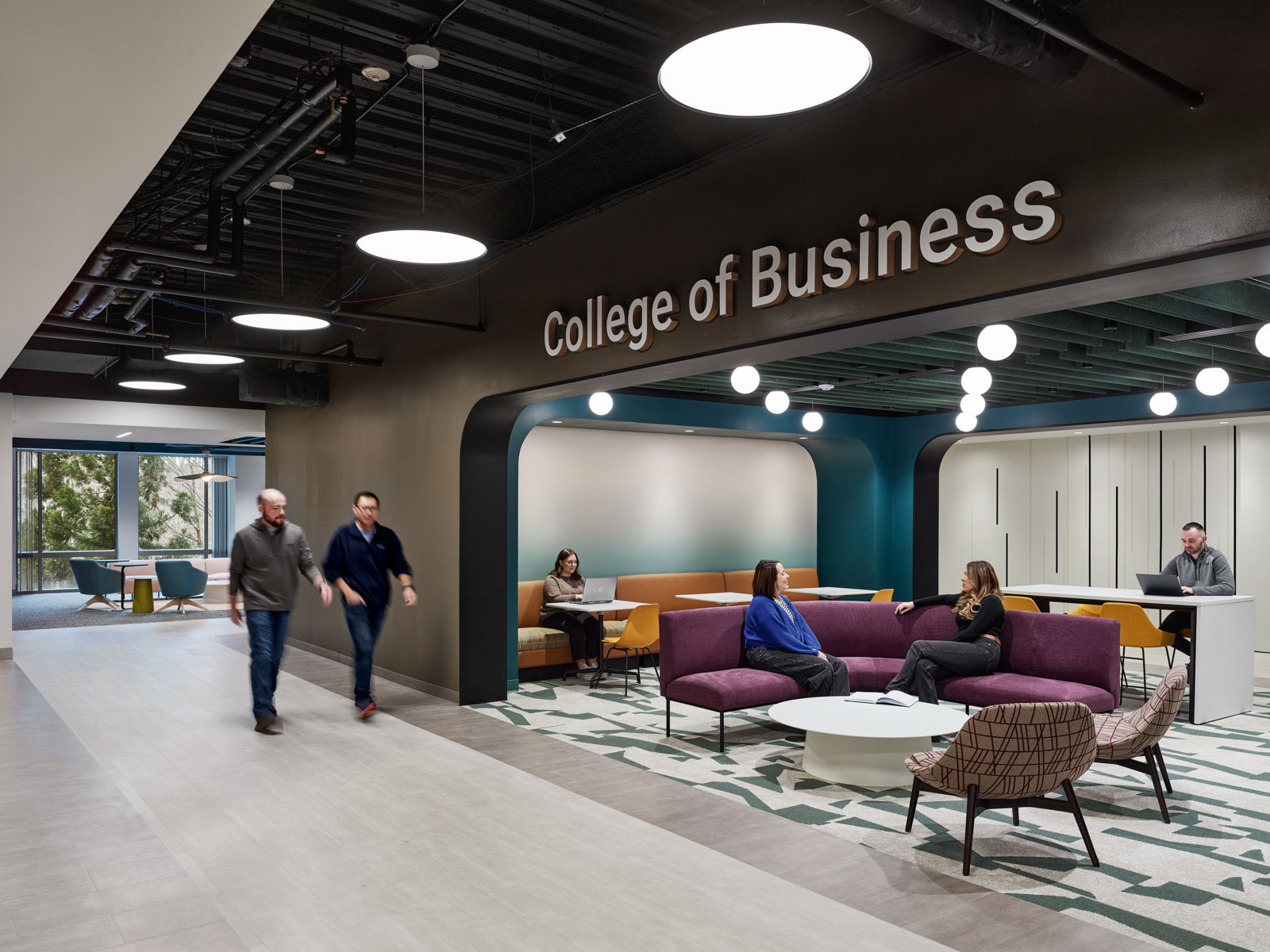
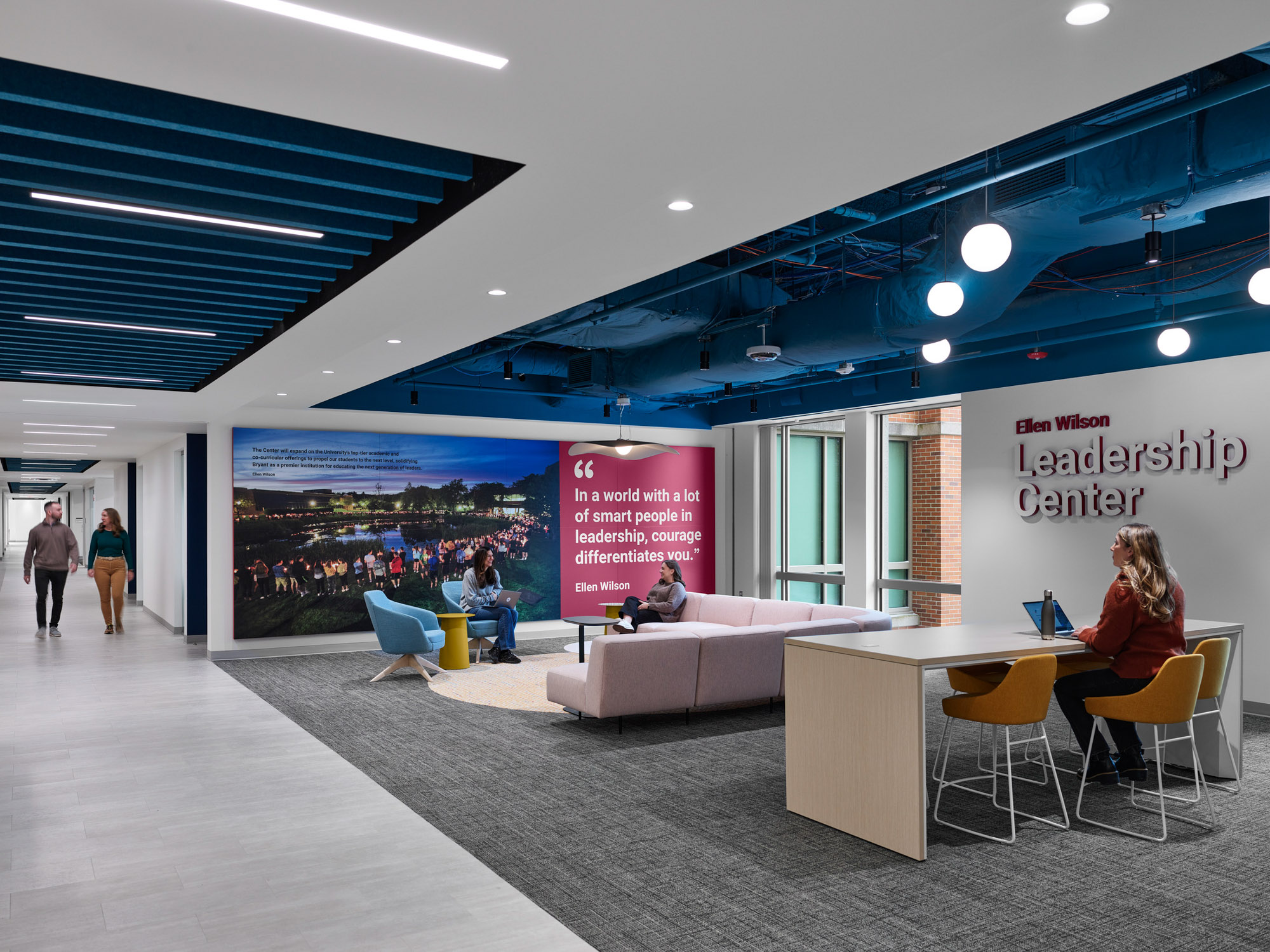
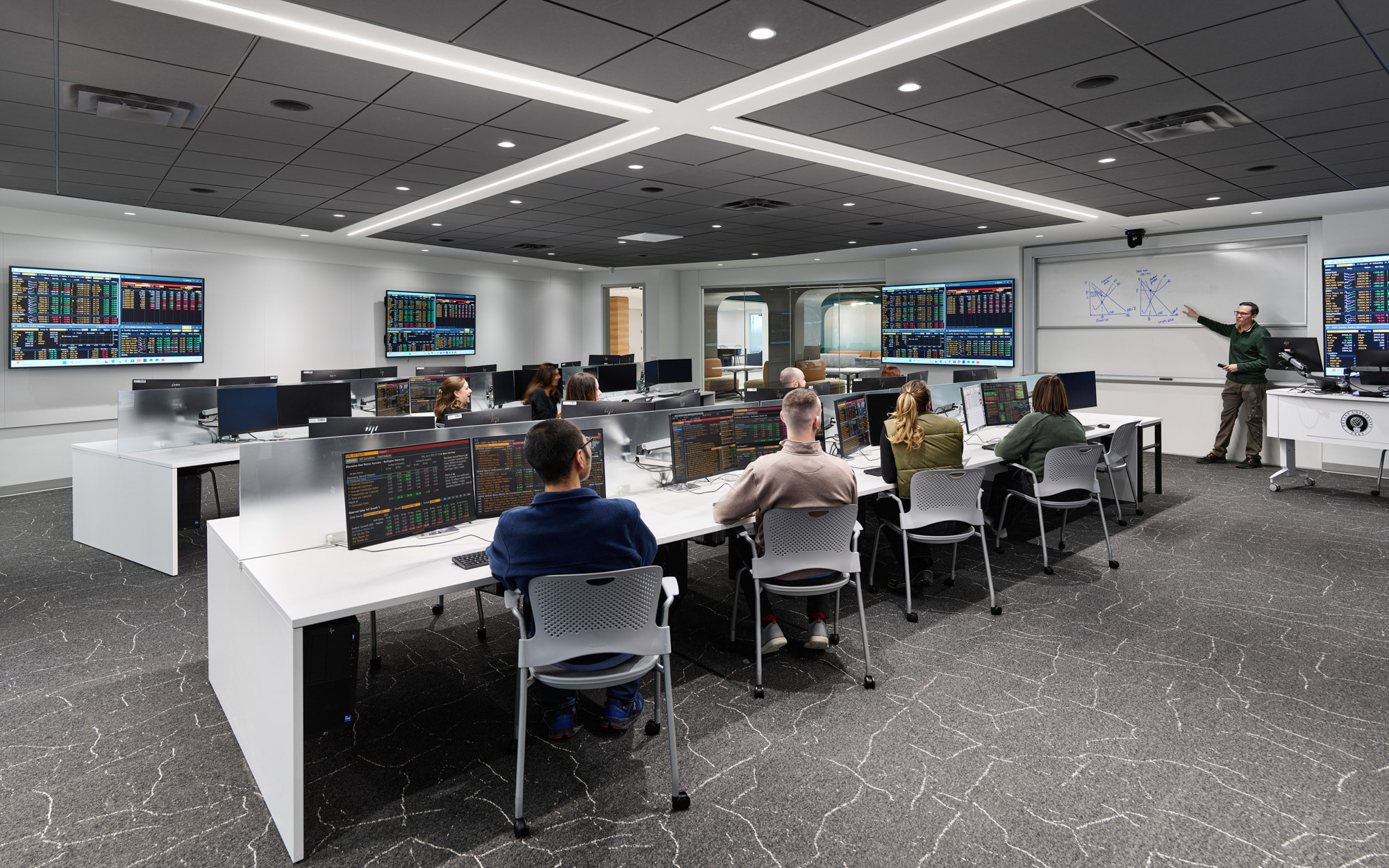
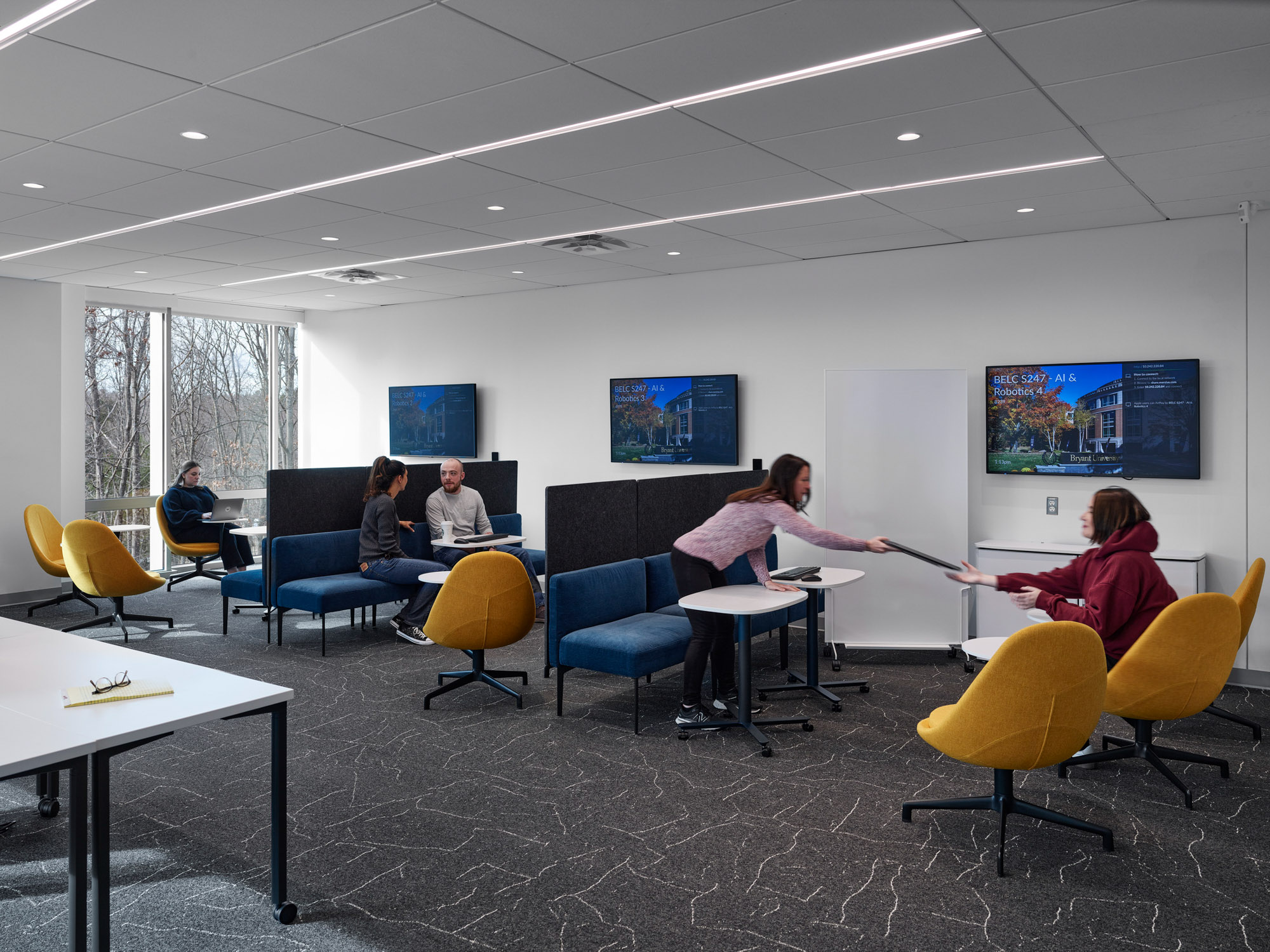
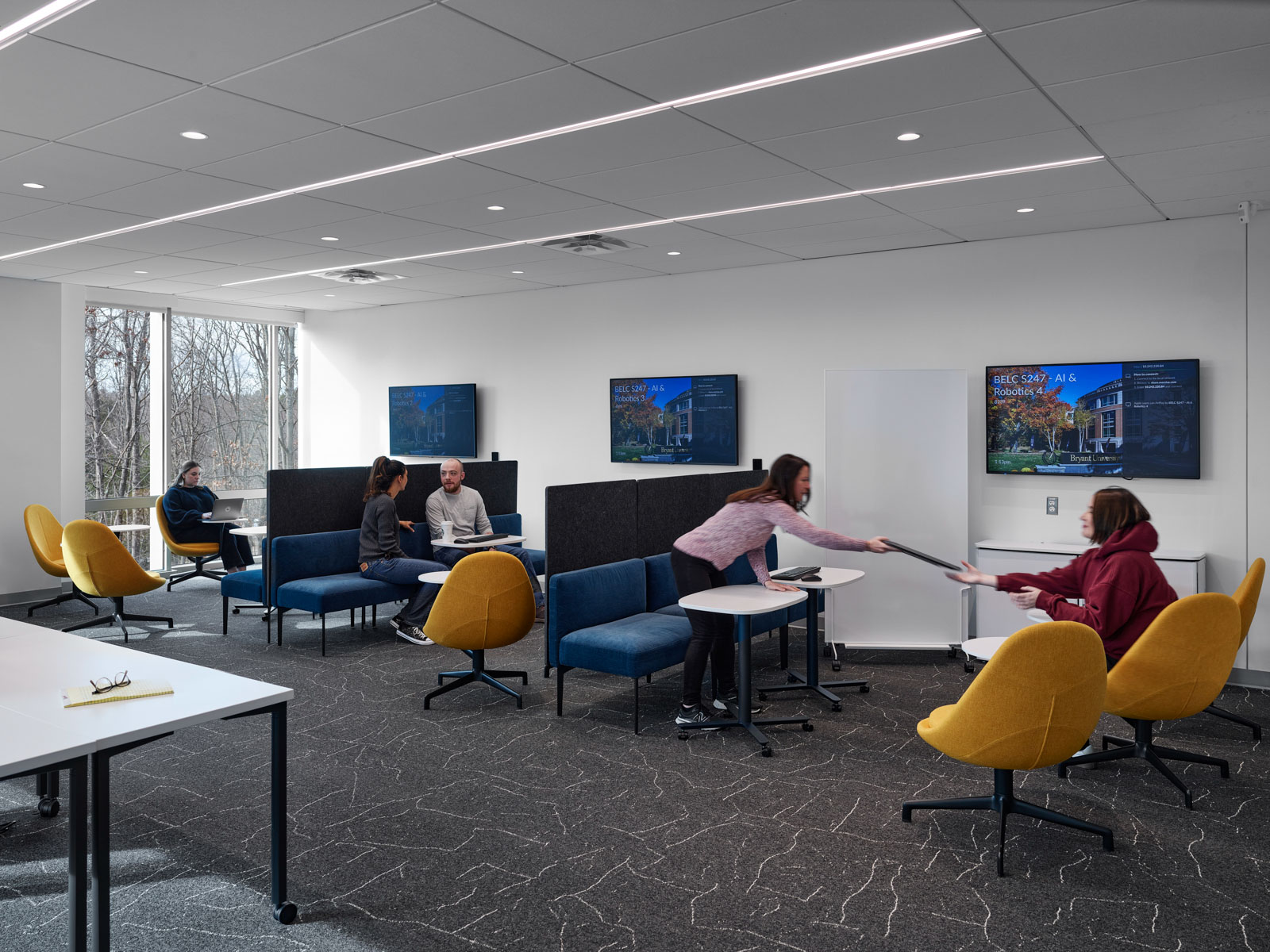
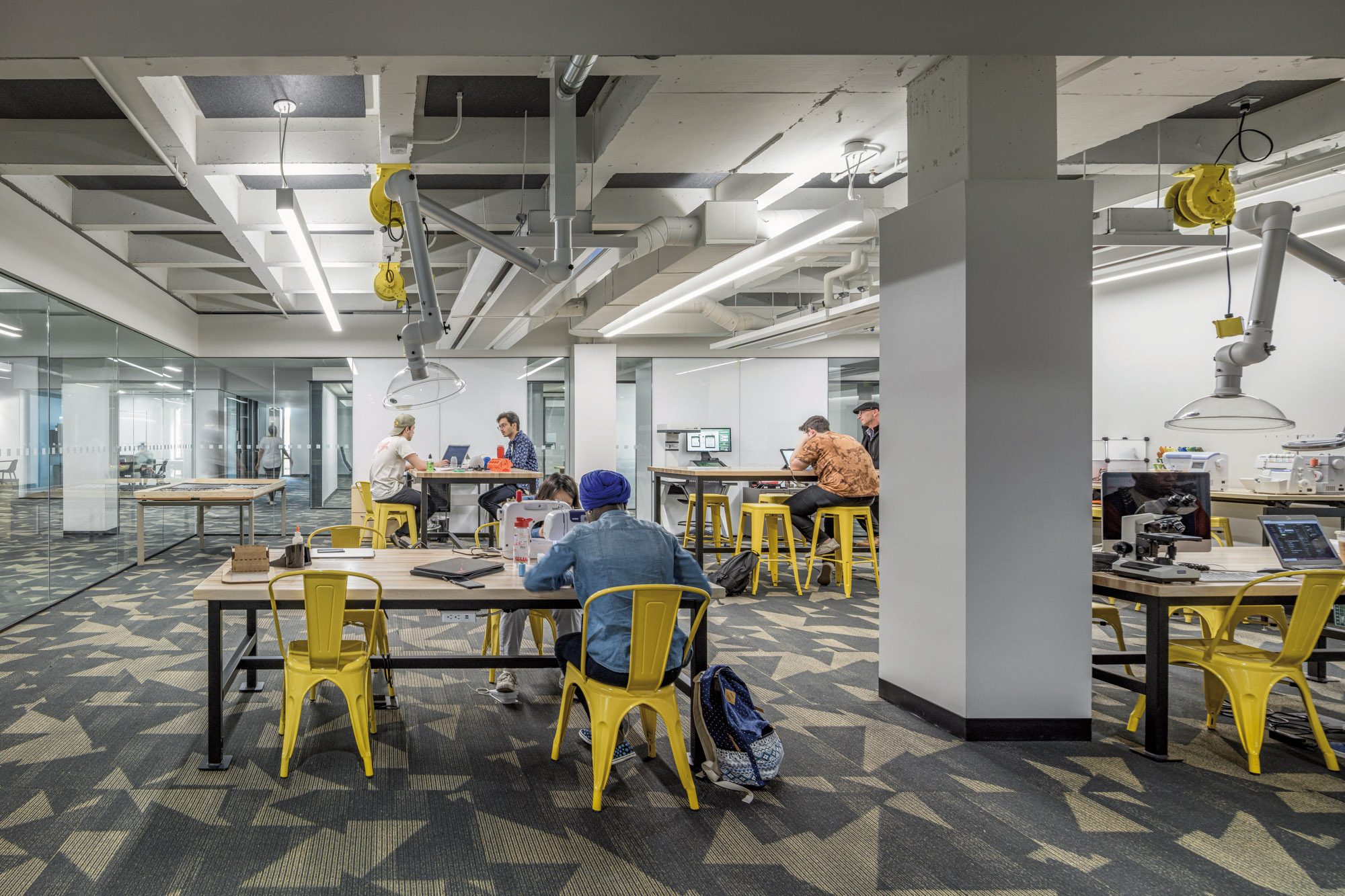
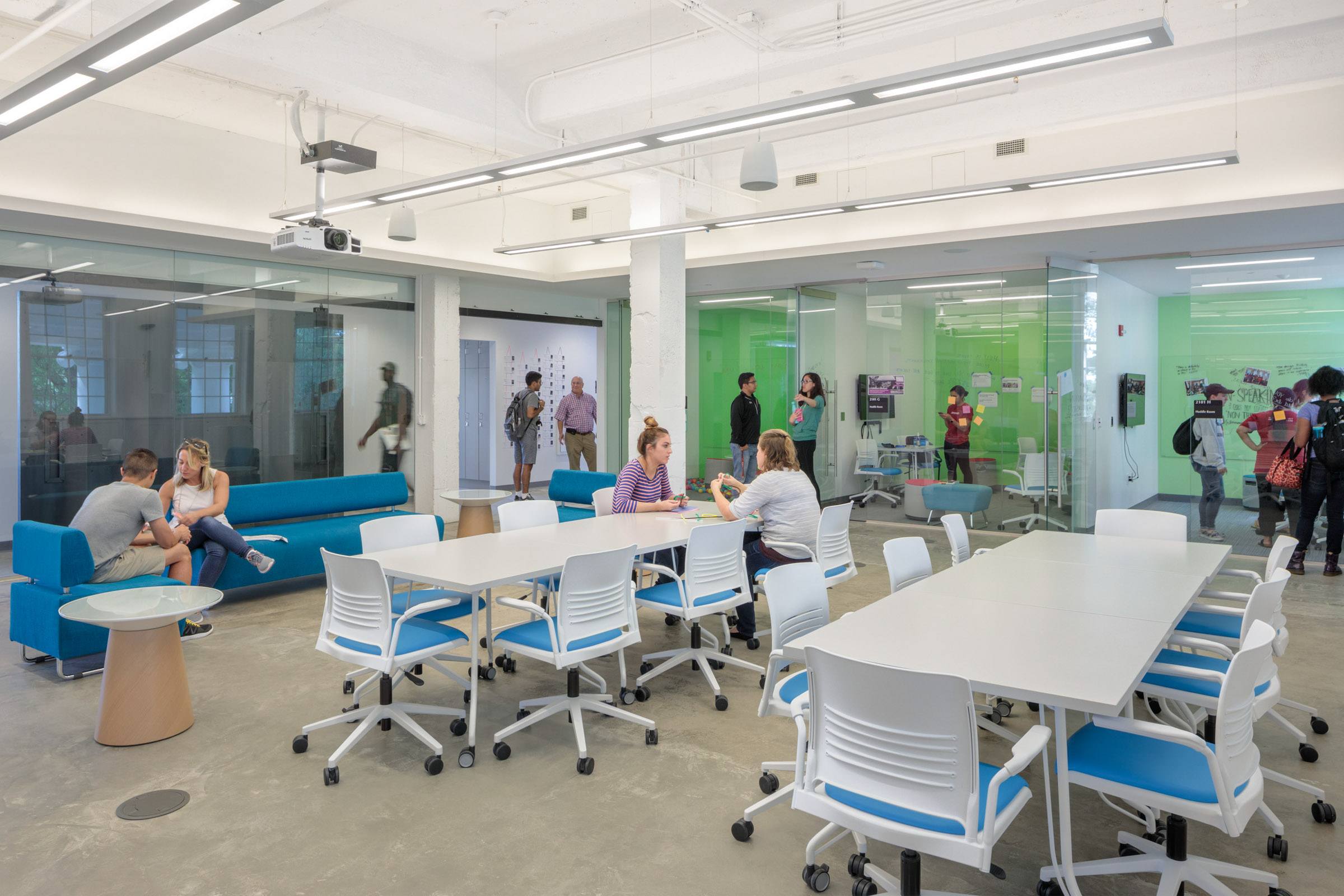
The purpose of the project was to adaptively reuse the building and transform it into BELC, a collaborative academic hub anchored by the College of Business and incorporating maker and innovation spaces, administrative offices, graduate and Career Accelerator programs, student organizations, and dining venues. Programming and design goals focused on creating high-quality, flexible learning environments, breakout and collaboration spaces, and integrated faculty workspace, all designed to support experiential learning and industry engagement.
See the bottom of the page for more transformative images.
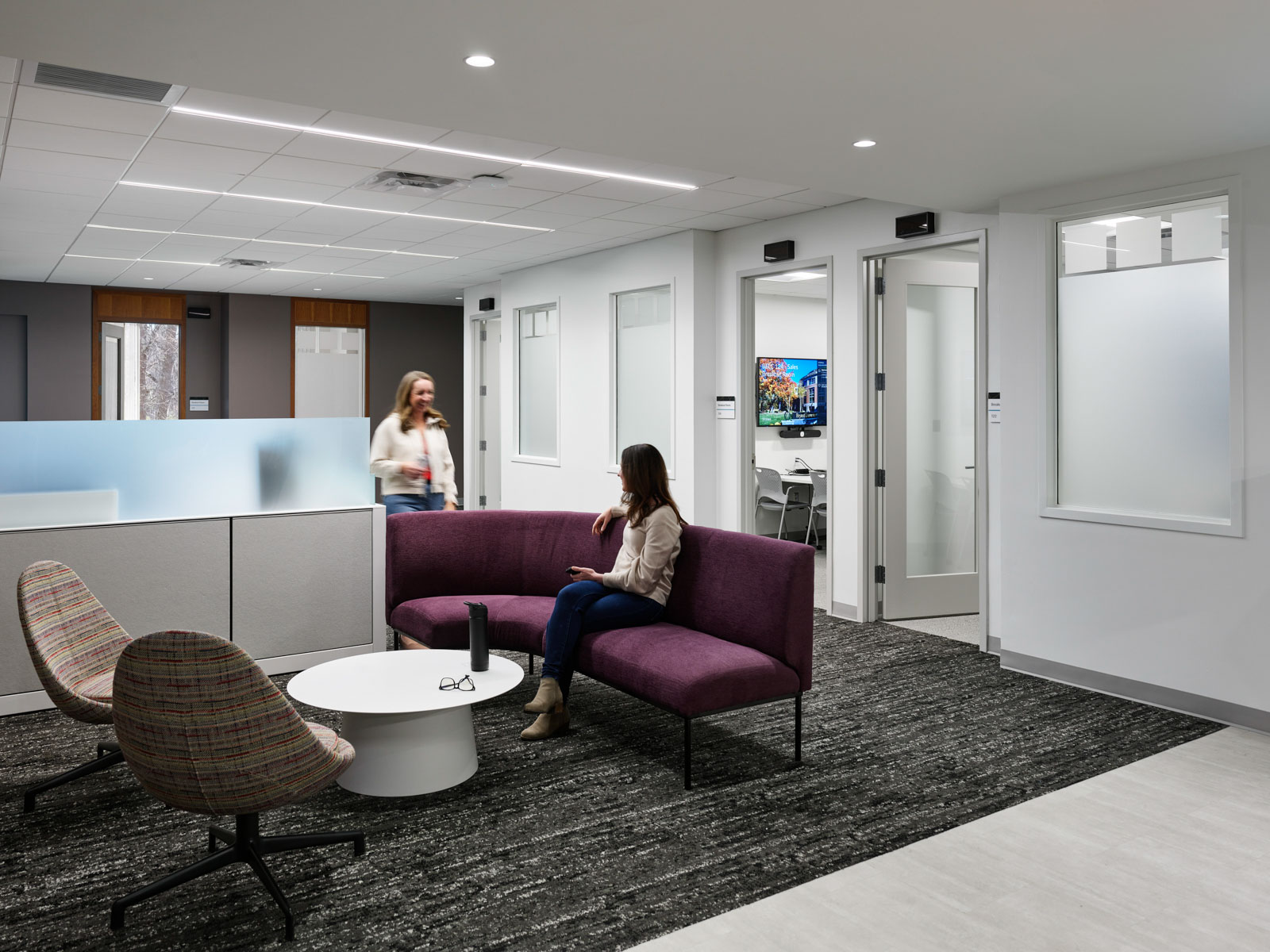
By carefully removing and adjusting interior walls, the team designed a series of specialized labs and flexible classroom spaces, faculty offices, as well as student collaboration areas and gathering spaces. Environmental graphics elevate the spaces, provide wayfinding, and clearly connect the project to Bryant University’s broader campus.
Implementation of BELC was guided by a strategic commitment to adaptive reuse and a modular planning approach that balanced schedule, budget, and long-term flexibility. Rather than gutting the building, the team leveraged its existing strengths, including a solid structural system, quality envelope, large windows, functional core infrastructure and well-maintained finishes. This allowed targeted interior interventions that maximized impact while minimizing disruption.
Reduced Carbon Impact
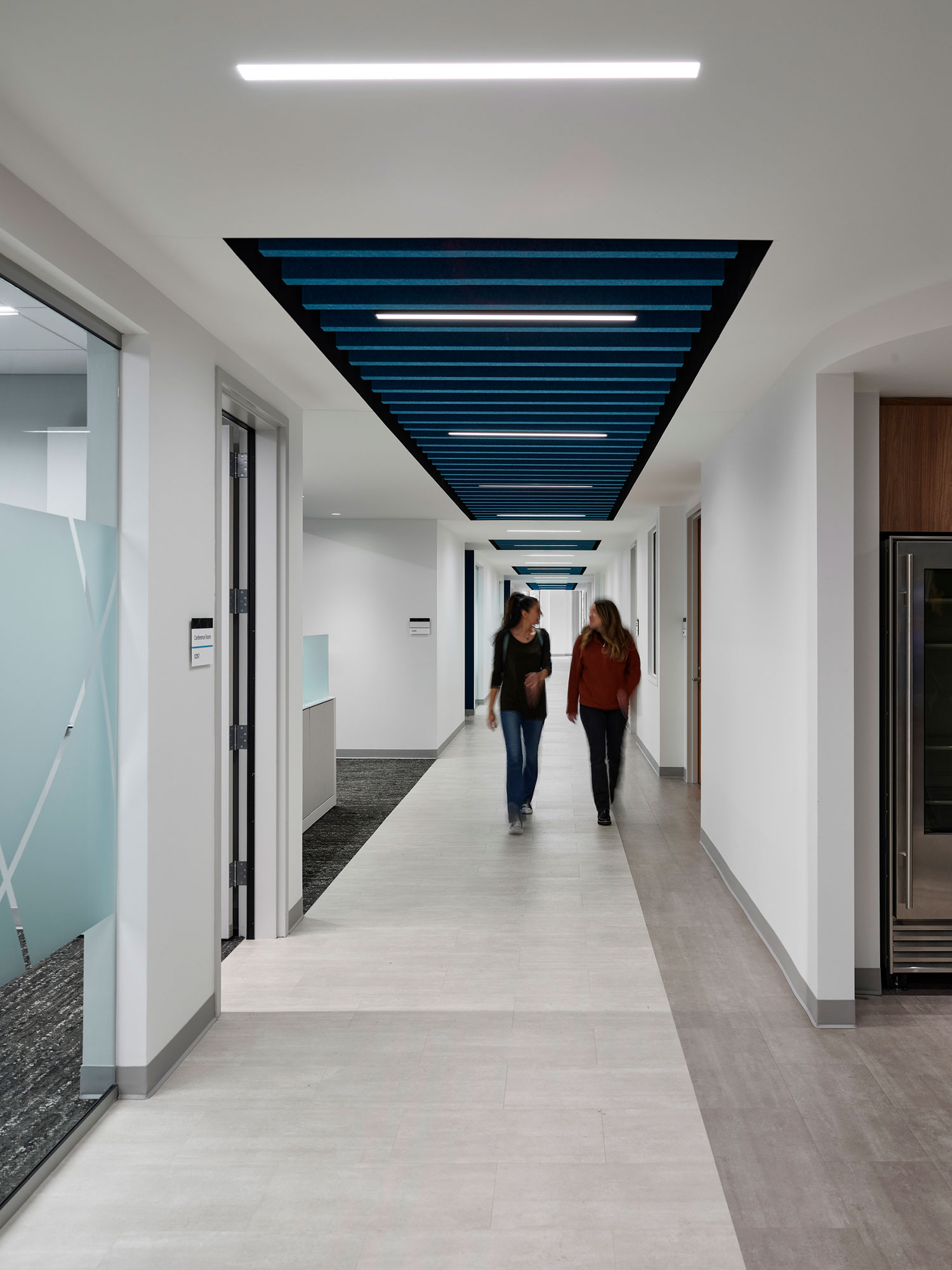
Adaptive reuse significantly reduced embodied carbon by preserving much of the existing core and shell, a substantially lower carbon footprint than a comparable 250,000 square foot new building. Over 60 percent of the building was lightly altered with paint, carpet, and minor repairs, including all third-floor office space, the large cafe and kitchen, event space, and enclosed offices. In the remaining areas, new walls, ceilings, and lighting were carefully integrated to retain existing infrastructure wherever possible. Leveraging these conditions allowed the team to meet Bryant’s academic needs sustainably and cost-effectively.
Planning Framework
A key innovation was the development of a repeatable planning module and clear circulation network that pairs learning spaces with adjacent faculty offices, reinforcing connections between teaching, collaboration, and student engagement while working efficiently within the existing floor plate. This scalable framework allows future expansion into currently shelled areas without reworking the design.
Designed for Learning
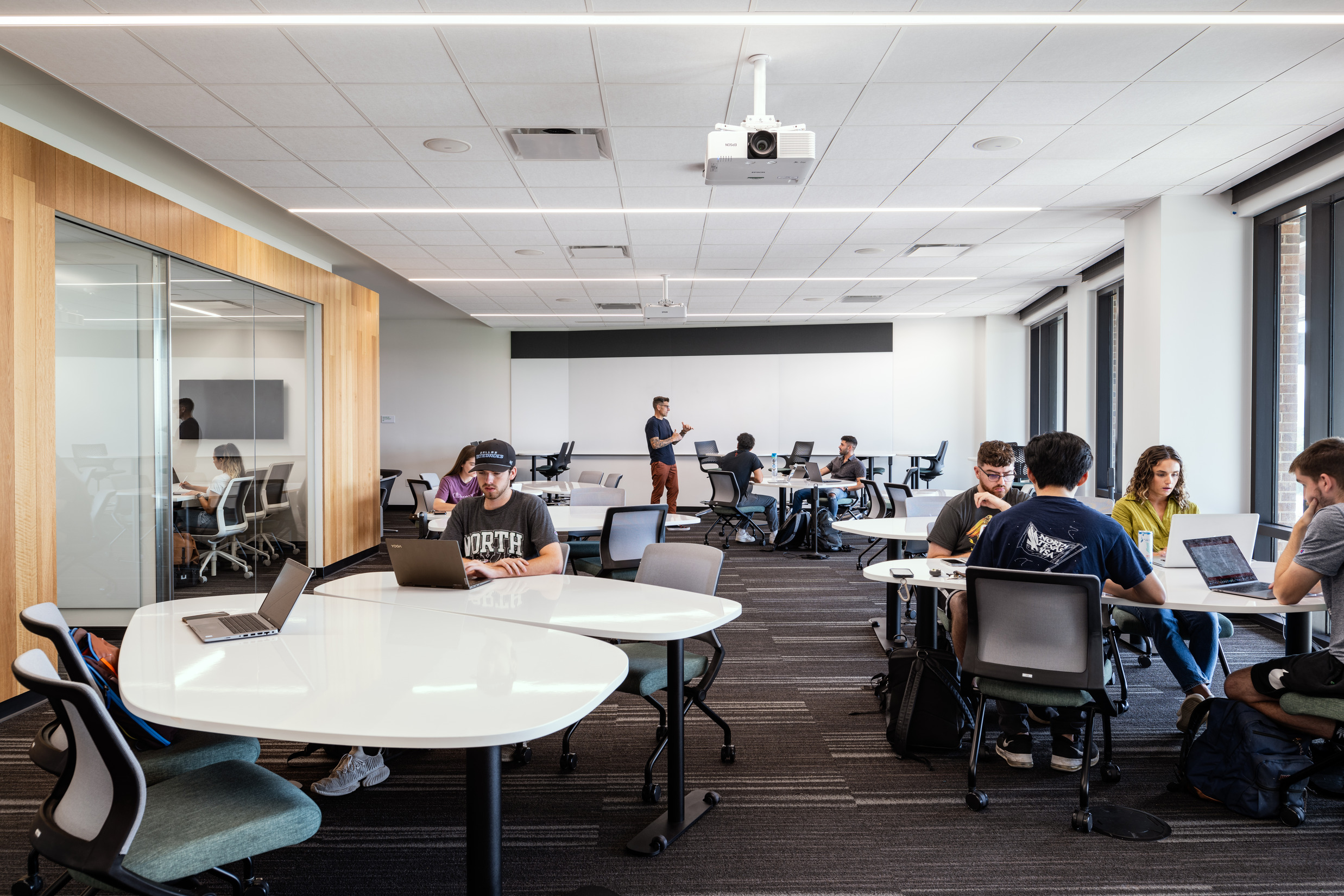
The design team prioritized student success by ensuring learning environments align with the Learning Space Rating System, a framework that measures how well classrooms support diverse learning and teaching modalities.
As a business school, Bryant prioritized case study classrooms, designed for discussion-based learning and real-world problem-solving. These spaces emphasize sightlines and eye contact through tiered seating, balancing fixed tables with flexibility to support student-to-student interaction.
While the LSRS framework promotes a broader range of active learning strategies and prioritizes adaptability, case study classrooms are designed for a specific instructional method. However, the design team aligned Bryant faculty’s pedagogical preferences with LSRS best practices, integrating elements that enhance circulation, autonomy, and engagement. The layout includes ample aisles for instructor mobility, generous desk surfaces, adjustable, mobile chairs, and low-tiered seating with a ramp for universal accessibility. Fixed tables are complemented by standing-height furniture at the back, accommodating different postural preferences.
Beyond layout, the classroom incorporates natural light, a biophilic material palette, and adjustable lighting and thermal controls to support occupants’ physiological needs. These thoughtful yet essential design choices align with LSRS Part B, addressing environmental quality, layout and furnishings, technology and tools, and inclusion. By integrating subtle yet impactful adaptations, the classrooms create a comfortable, supportive, and adaptable learning environment for all students.
BELC transforms a corporate office building into a vibrant academic environment, demonstrating how thoughtful adaptive reuse can preserve embodied carbon while creating spaces that support contemporary teaching, learning, and collaboration.