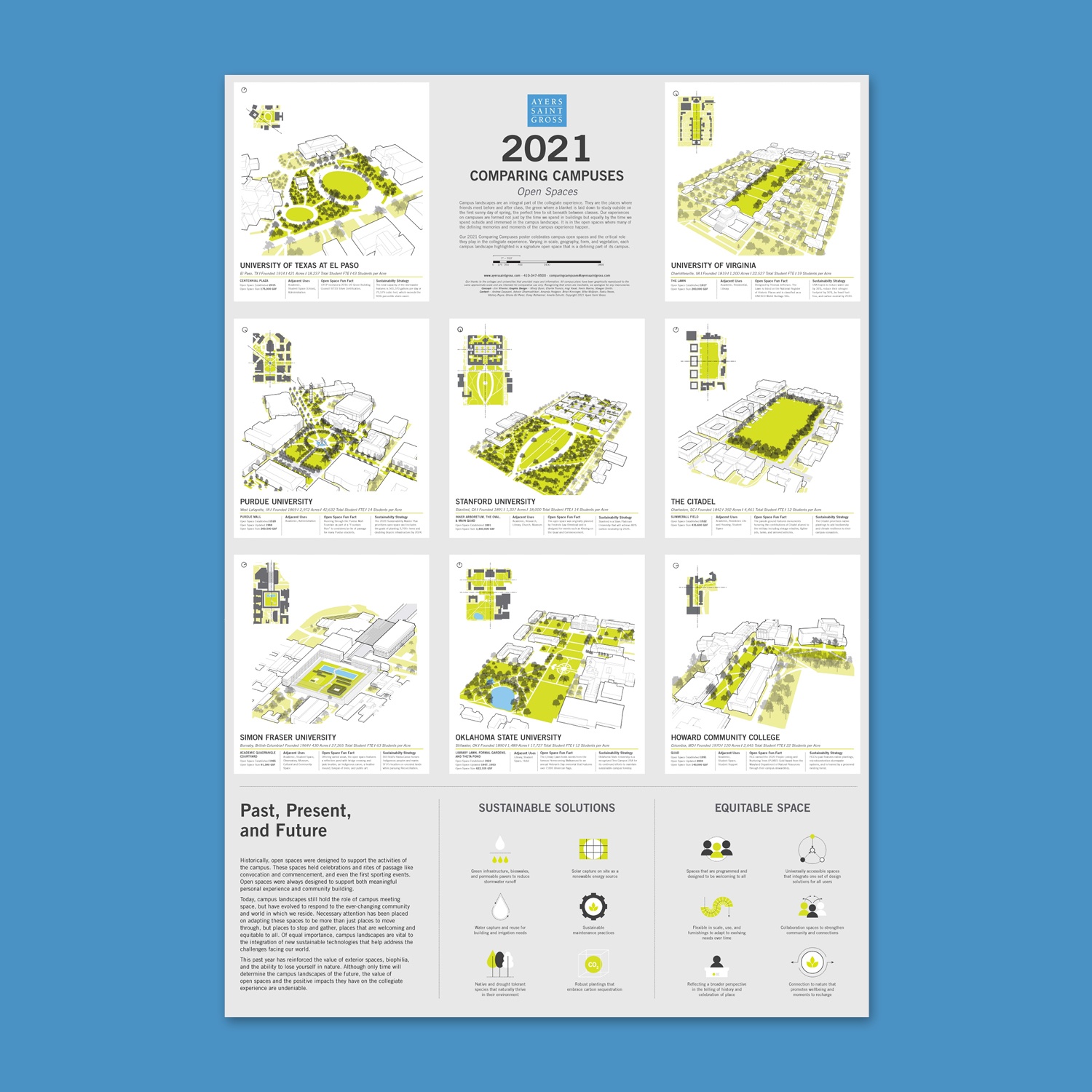
As the higher education community gathers in Minneapolis for the annual SCUP conference, we have been thinking about resilience and the role institutions play in helping communities navigate change. We can see that history in the ways campuses have been rebuilt, adapted, expanded, and reimagined in response to external pressures and internal needs. Those changes reveal how colleges and universities have supported their communities while continuing to advance their missions and values.
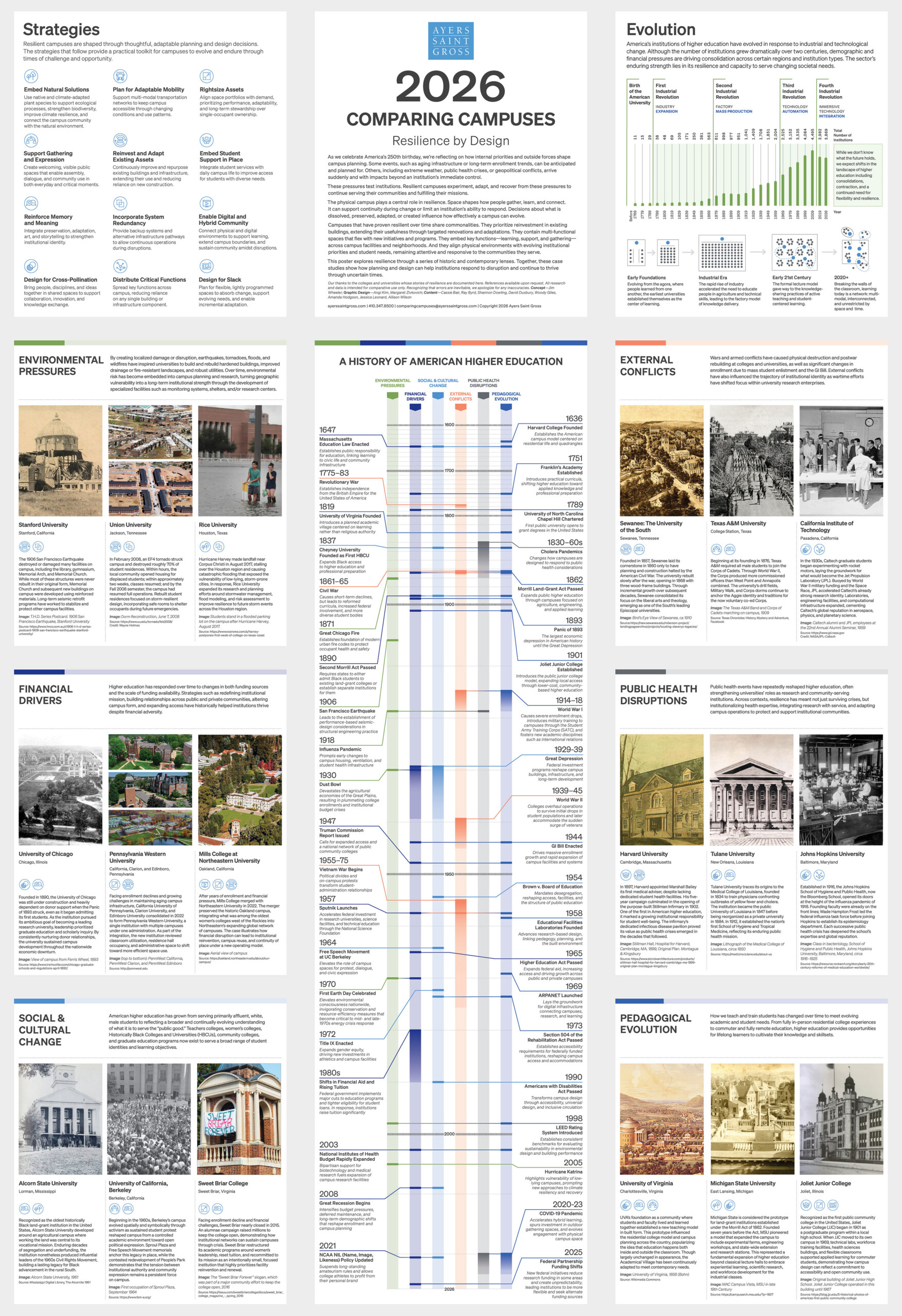
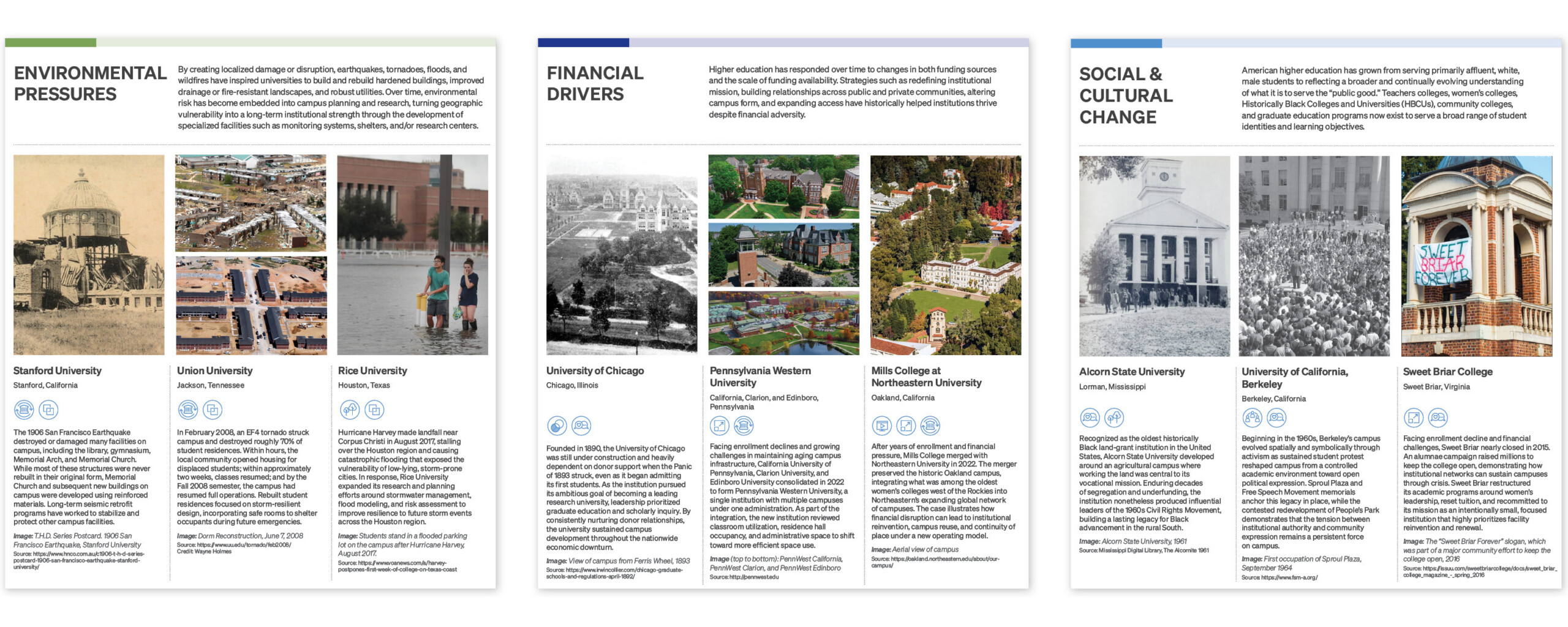
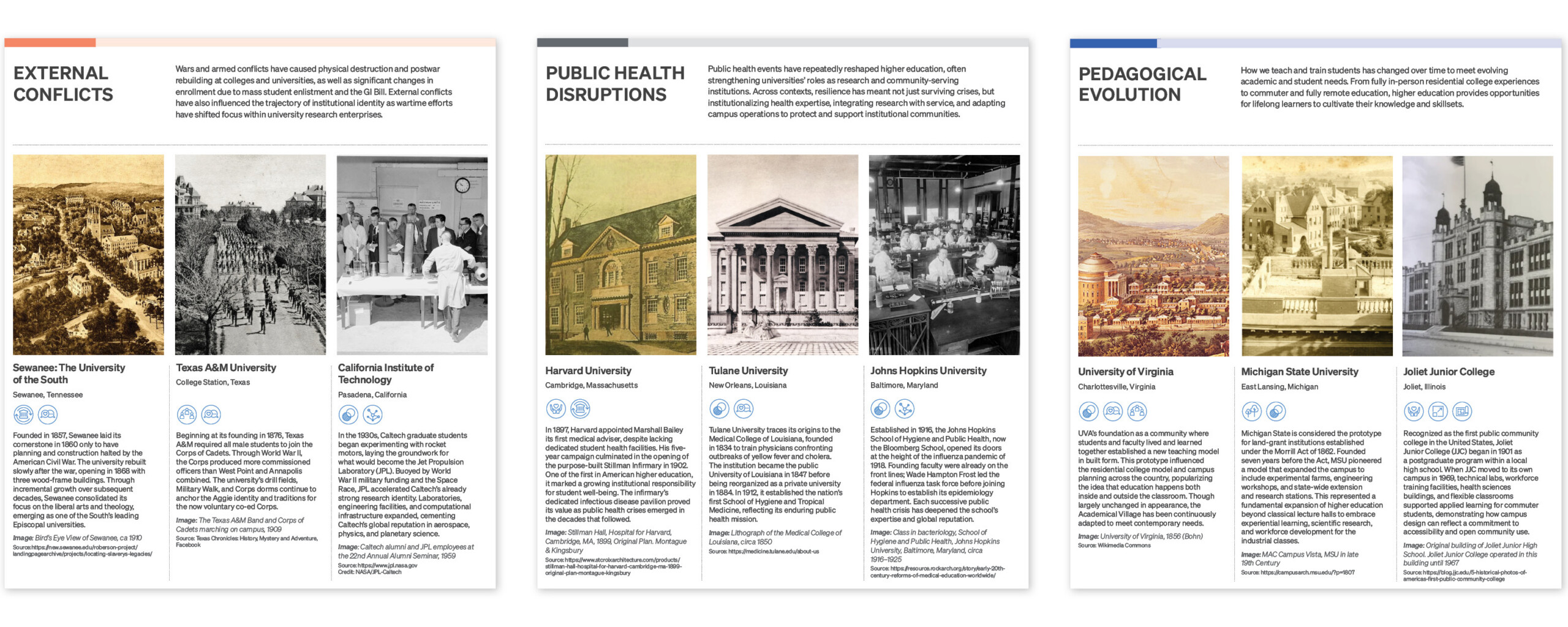
This year’s Comparing Campuses poster explores how both acute and long-term resilience events have shaped colleges and universities in the United States. The stories capture institutional responses to environmental pressures, financial drivers, social and cultural change, external conflicts, public health disruptions, and pedagogical evolutions. A summary of shared strategies is mapped against institutional responses to highlight how many choices have supported resilience in the face of diverse circumstances.
In the arena of environmental pressures, we explored how localized damage and disruption from earthquakes, tornadoes, and floods have inspired universities to build and rebuild hardened buildings, improved drainage or fire-resistant landscapes, and robust utilities. This research also taught us how many colleges and universities integrate the geographic vulnerabilities of their host communities into the development of specialized facilities such as monitoring systems, shelters, and/or research centers. We anticipate this connection between environmental resilience and the academic and research enterprise of institutions will increase in the years to come.
Over time, the funding sources and scale of funding available for higher education has changed. Institutions have responded in a variety of ways including through the cultivation of donor relationships, the consolidation of institutions to create new entities, and through mergers and acquisitions. These strategies have sometimes been paired with redefinition or clarification of institutional mission and have often altered campus form – either through down-sizing or through selective investment in signature programming.
The definition of who is a student within higher education has evolved significantly from serving primarily affluent, white, male students to serving a broader and continually evolving cross-section of society. Colleges and universities have formed over time to serve a variety of student identities and learning objectives, and their physical forms reflect the diverse social and cultural needs of the communities they serve.
Wars and armed conflicts have disrupted communities and caused physical destruction and postwar rebuilding booms at colleges and universities. The GI Bill after World War II caused an enrollment boom that spurred both an increase in the overall number of higher education institutions as well as growth in physical campus footprints to accommodate more students. Broader federal investments in wartime technologies encouraged the creation and expansion of robust research laboratory programs.
Like wars and armed conflicts, public health events have repeatedly disrupted and reshaped higher education over time, often strengthening universities’ roles as research and community-serving institutions. Community needs for health and well-being paired with funding dollars from private and public sources have prompted facilities development for both treatment and prevention.
How we teach and train students has changed over time to meet evolving academic and student needs. From fully in-person residential college experiences to commuter and fully remote education, higher education provides opportunities for lifelong learners to cultivate their knowledge and skillsets.
We catalogued many more resilience stories than what made it onto this year’s poster and are excited to put this knowledge to work for you in taking the next steps forward with your current resilience challenges. Please reach out to share your current challenges with us – we’d love to help navigate them with you and put the lessons of the past to work in cultivating the future.