This site uses cookies – More Information.
Dr. Phillips Nursing Pavilion
University of Central Florida
A high-tech nursing facility embraces innovative learning while fostering student community.
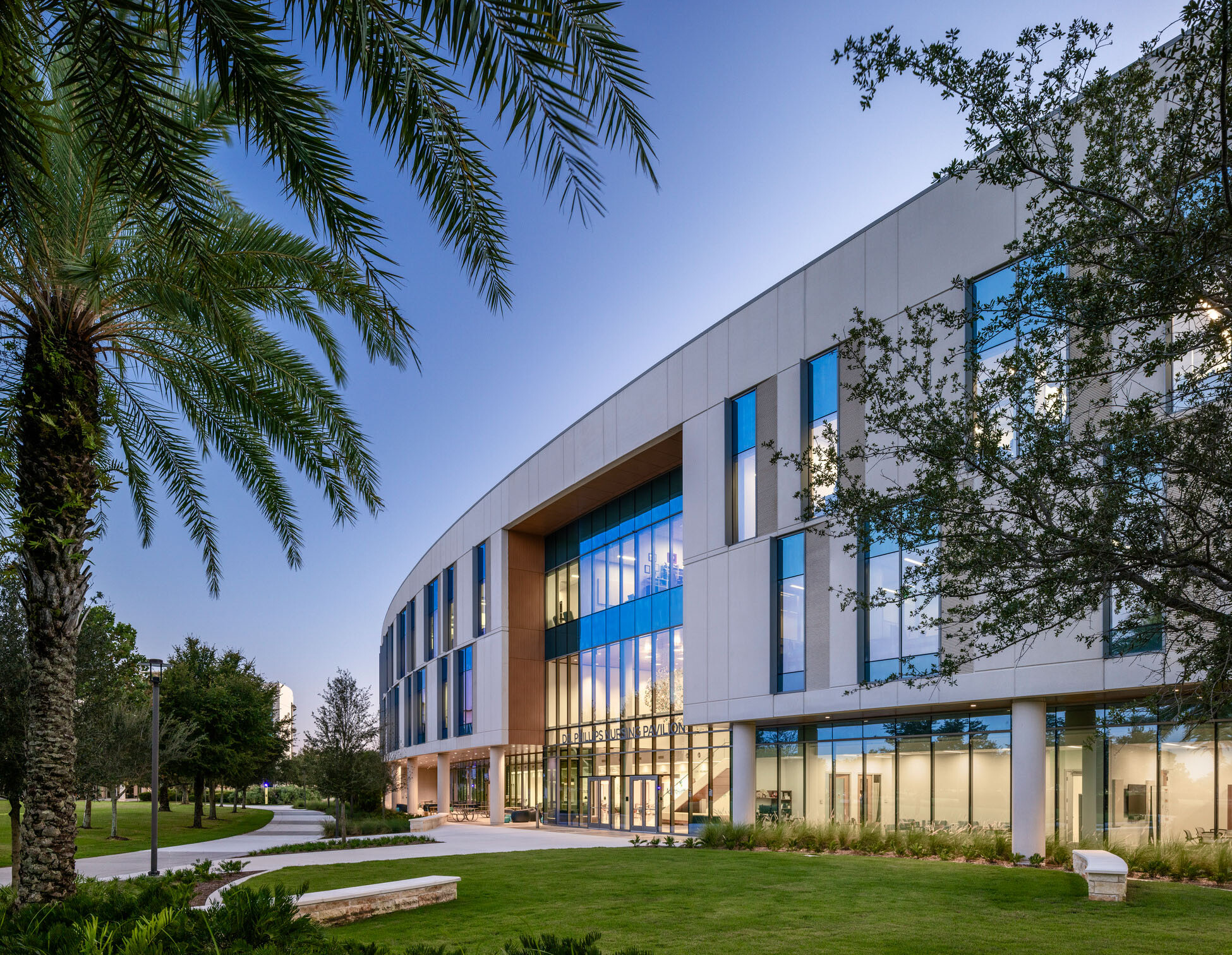
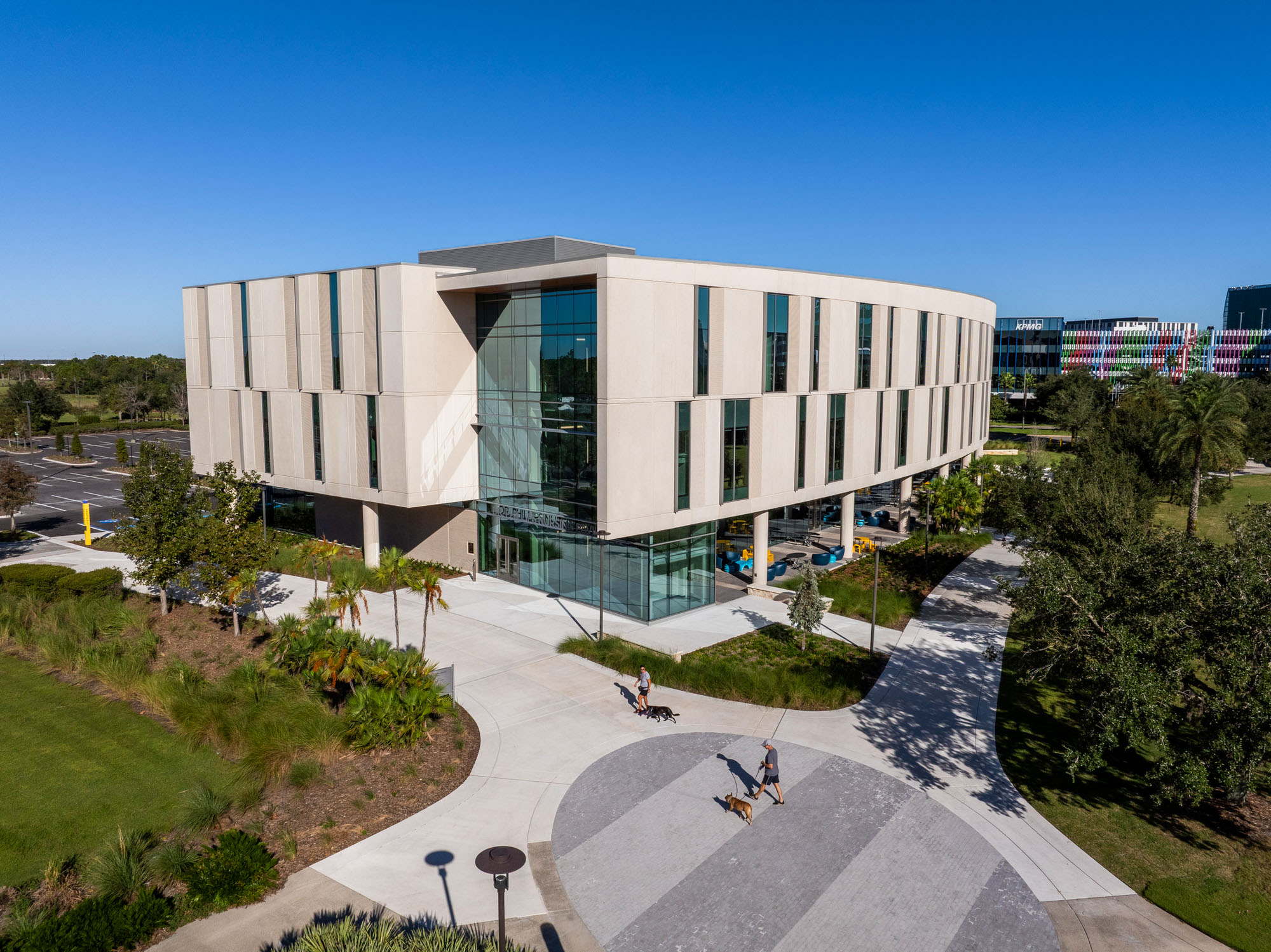
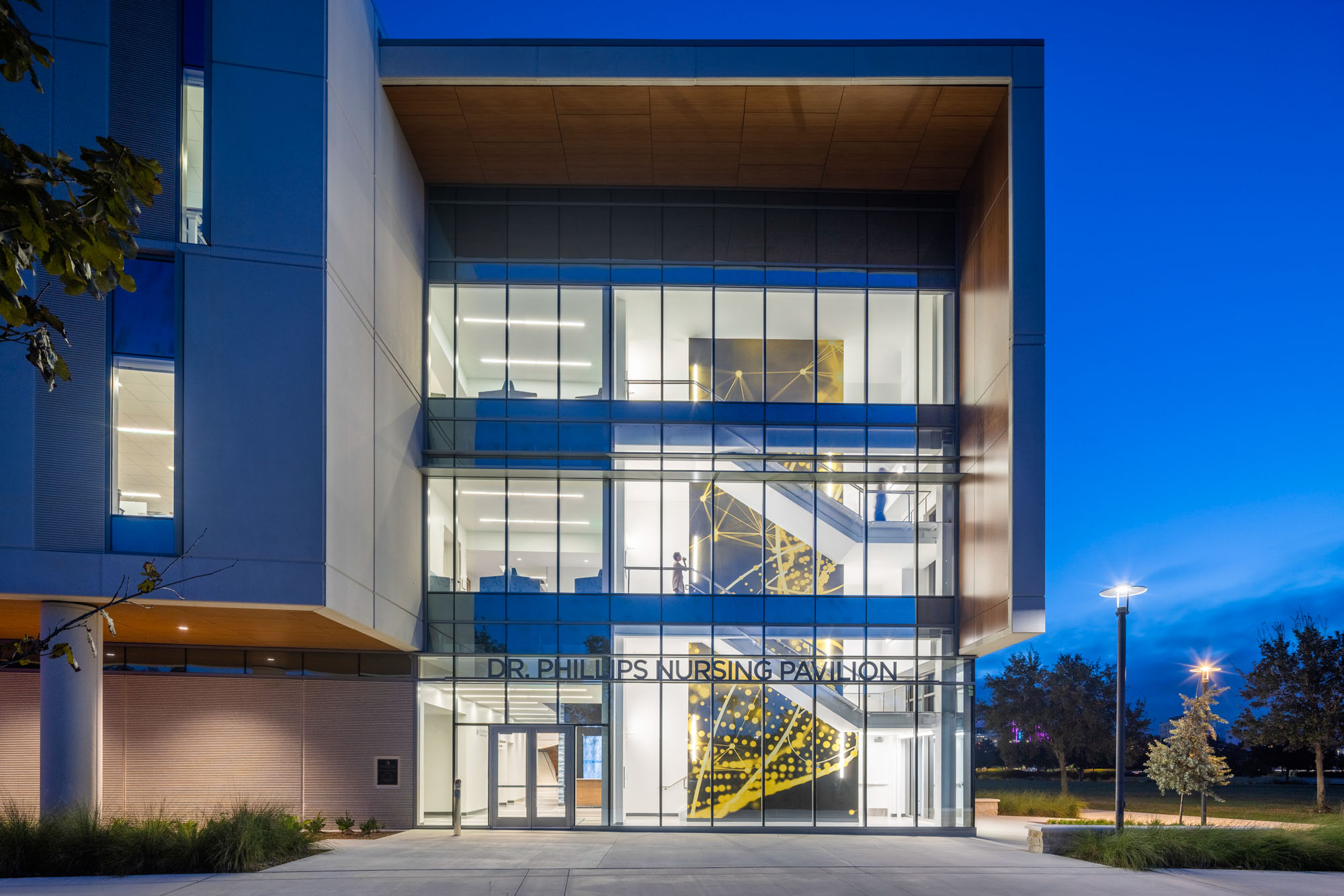
The Dr. Phillips Nursing Pavilion is designed to further the mission of UCF while addressing the larger health needs of the region. Designed in collaboration with Hunton Brady Architects, the 90,000 SF facility enables the university to graduate an additional 150 new licensed nurses annually to address the area’s critical nursing shortage. The building is located adjacent to the College of Medicine on UCF’s Academic Health Sciences Campus in Lake Nona, encouraging cross-disciplinary collaboration and engagement.
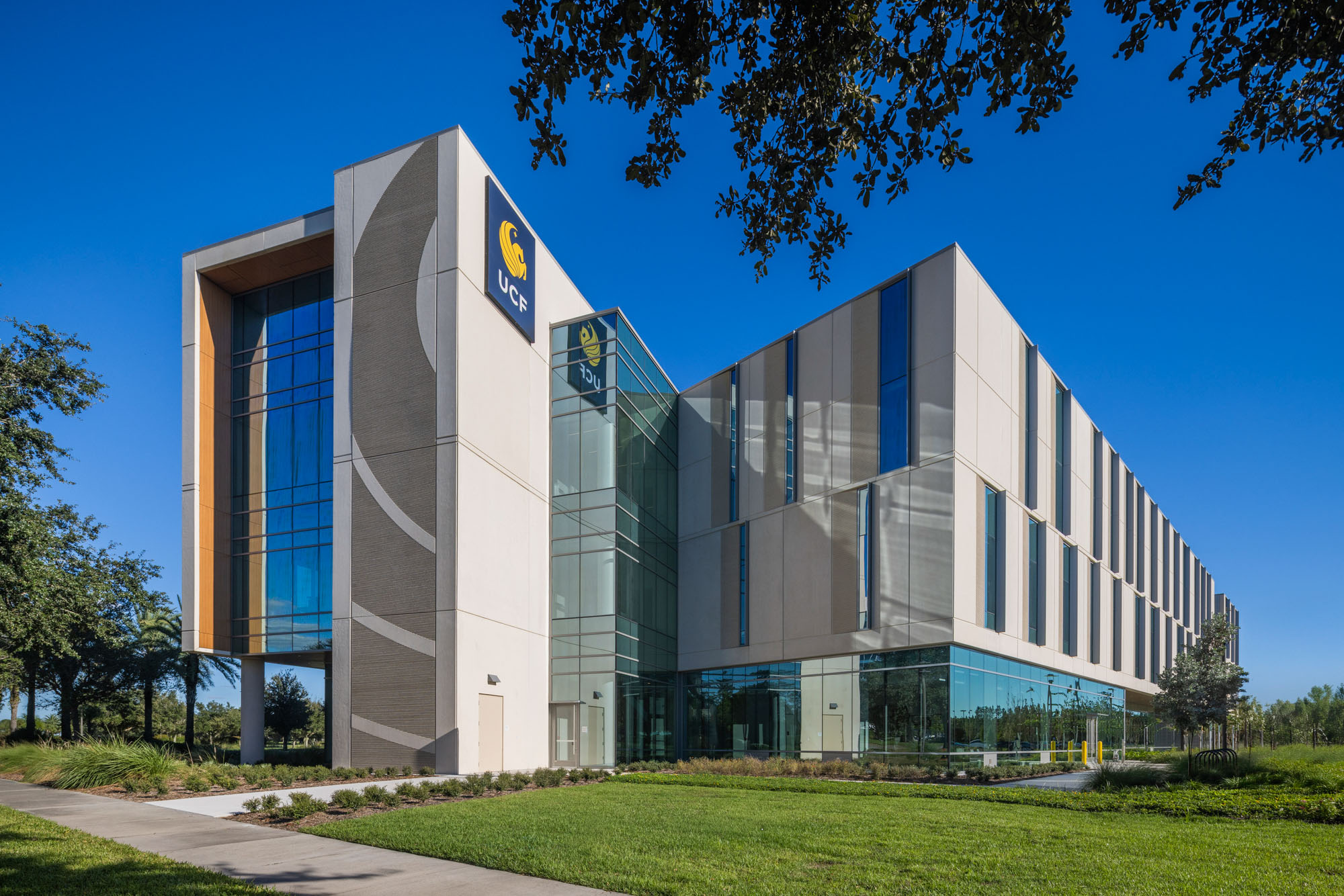
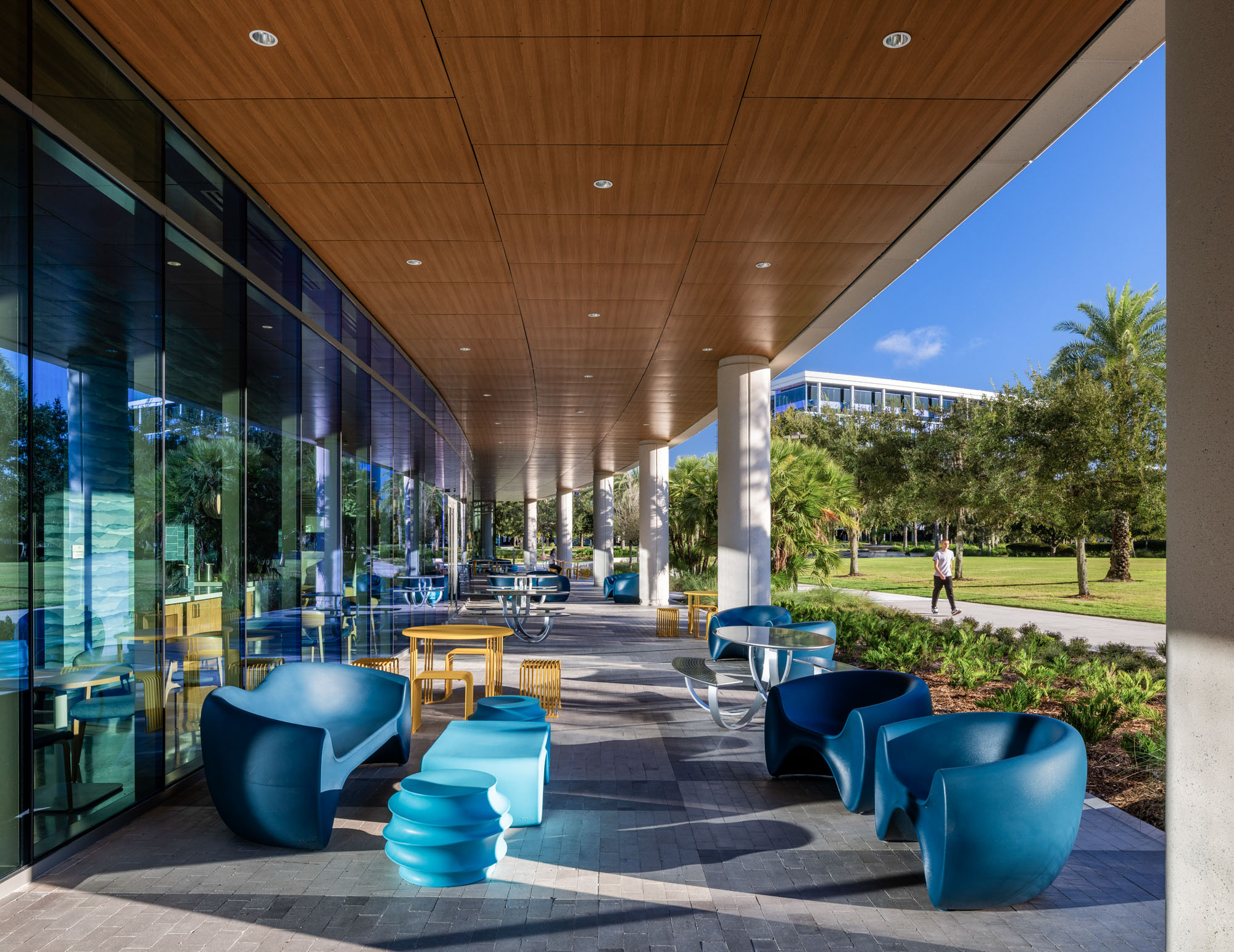
The building’s exterior mixes precast concrete and glass curtainwall systems with a dynamic curve on the east façade. Its organic form takes inspiration from the surrounding landscape, including the softer shapes of Lake Nona Boulevard, the circular College of Medicine, and the elliptical green of the university quad. Wood accents at the entry add warmth while the welcoming porch offers students a shaded, comfortable space to gather and collaborate.
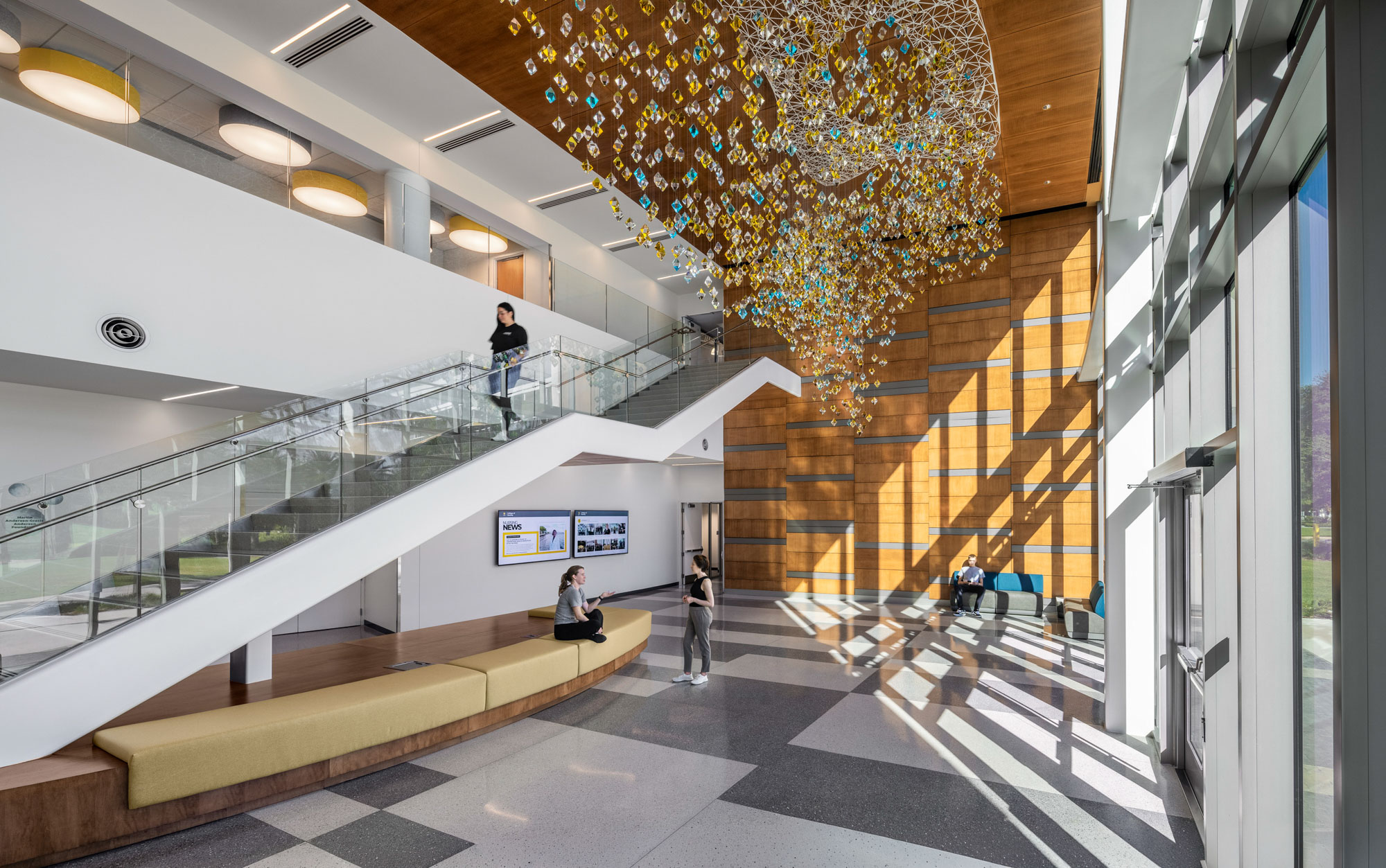
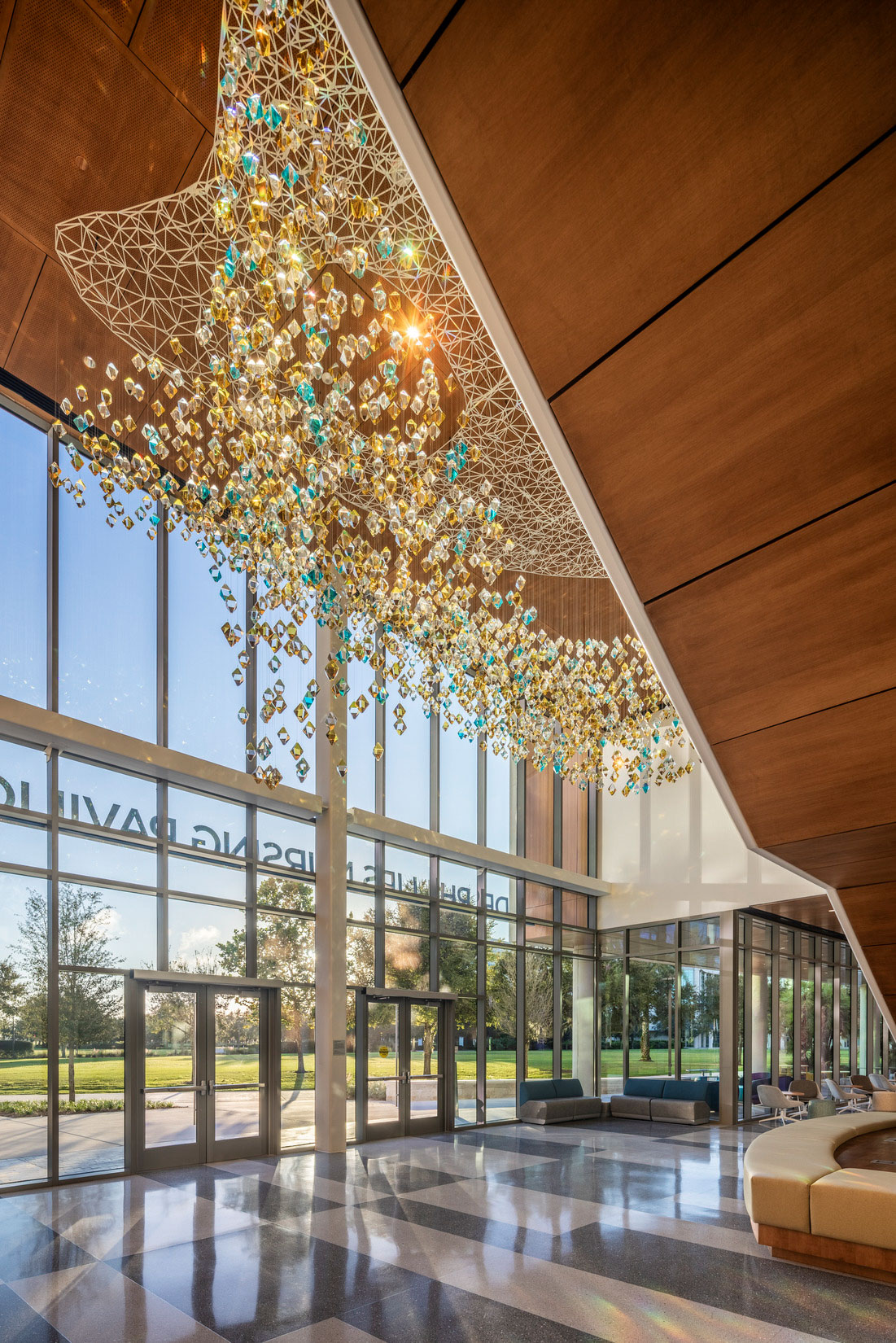
The two-story north lobby features a monumental stair, comfortable seating, and terrazzo floors. A suspended public art piece comprised of gold and blue prisms reflects light throughout the space to convey the energy and spirit of nursing.
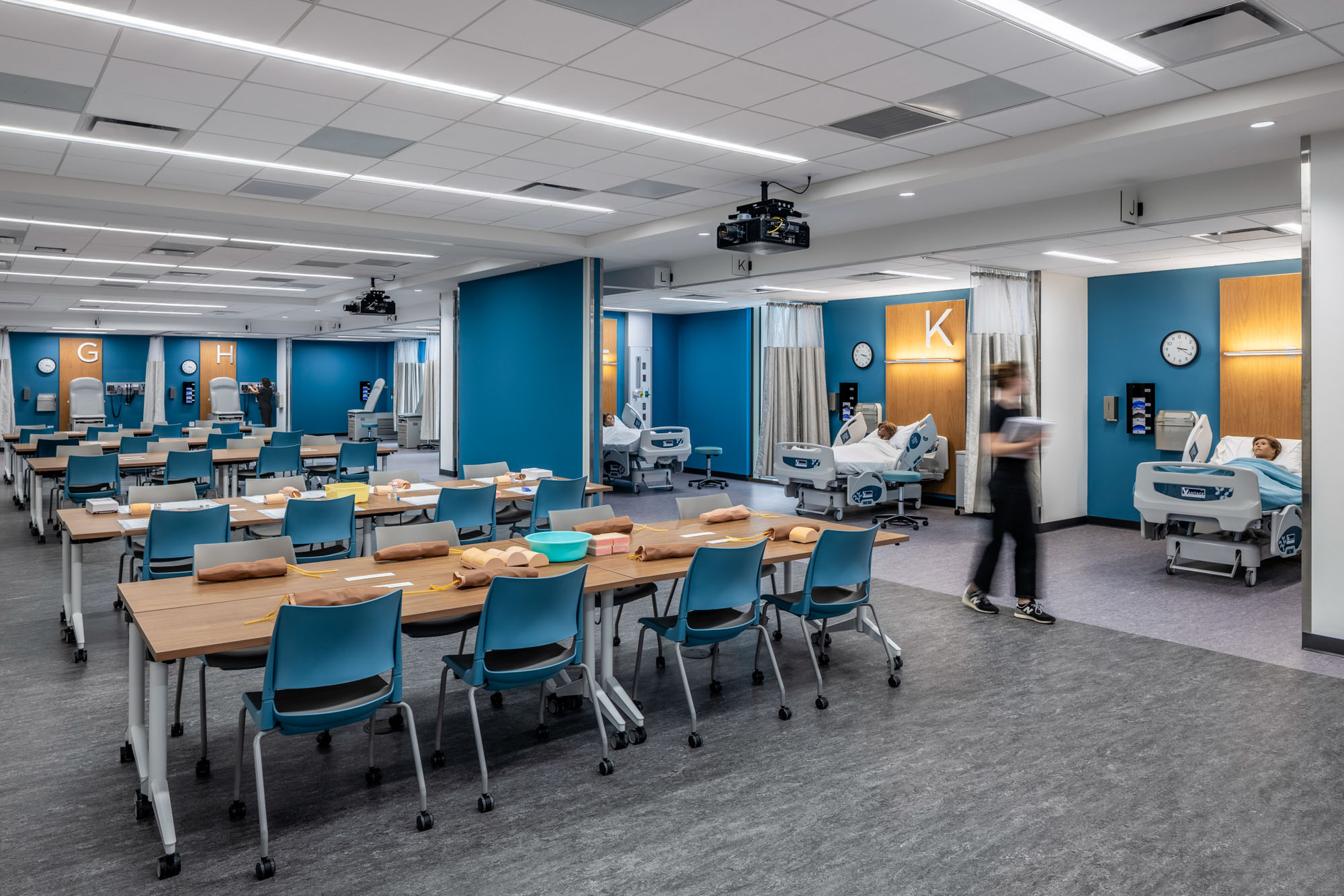
An open simulation suite at the University of Central Florida College of Nursing includes hospital beds, patient mannequins, and flexible classroom seating for hands-on instruction.
The new facility is designed to integrate and embrace new and evolving technologies. A Nursing Simulation Center on the second and third floors includes a 12-bay health assessment lab and a 12-bay skills lab with hospital beds or exam tables at headwalls. A central debrief classroom is generously sized to include demonstration space, while movable furniture and walls can be reconfigured to allow for maximum flexibility. Charging nooks are distributed throughout the space to support telepresence robots, laptop and iPad carts, and UVC LED cleaning technology for VR headsets.
An immersive reality research room allows faculty to pilot and conduct dry runs on simulation scenarios before deploying them to students, while a virtual reality lab for students accommodates all modes of XR, with storage zones and enlarged doors to accommodate equipment for mixed or augmented reality simulations.
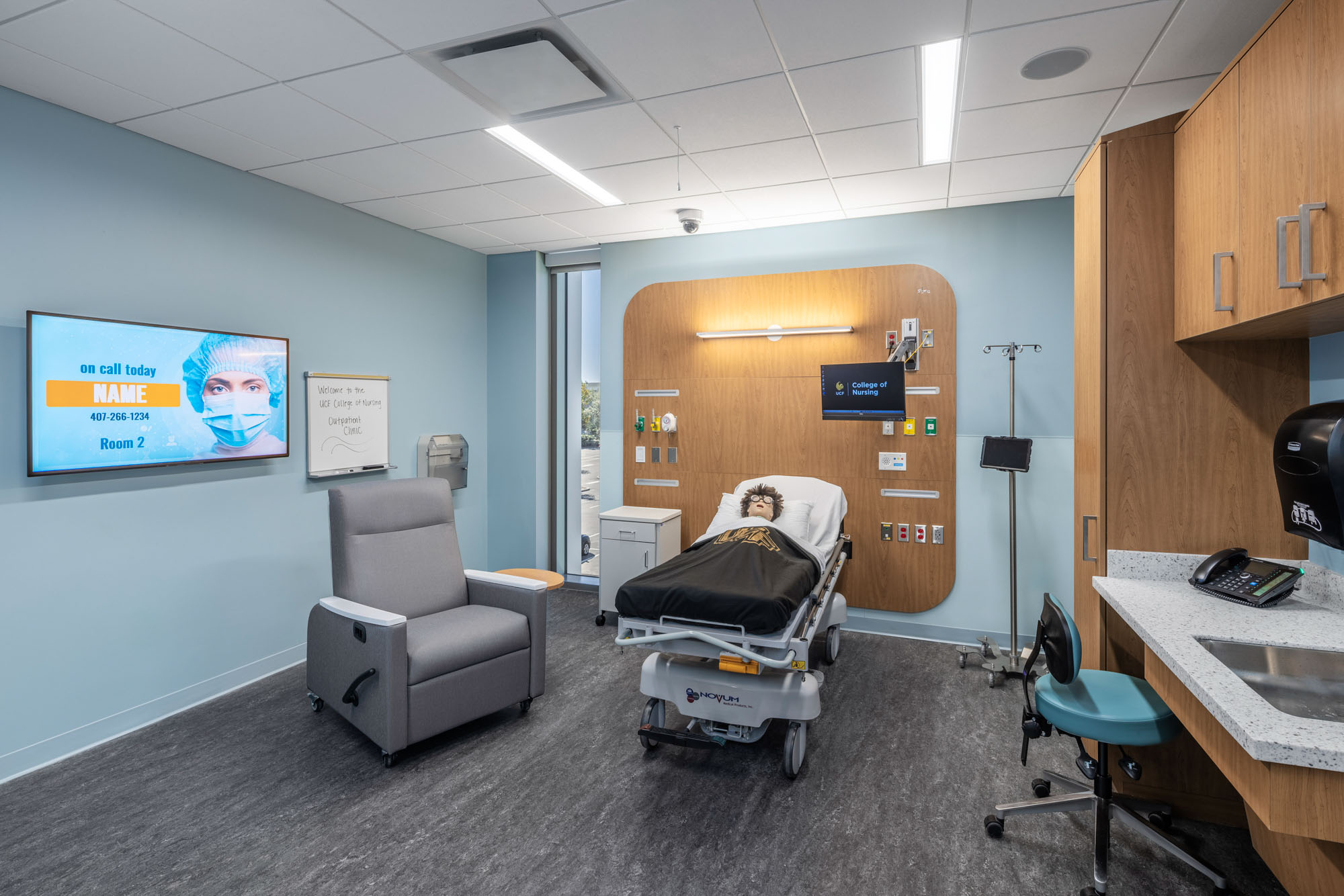
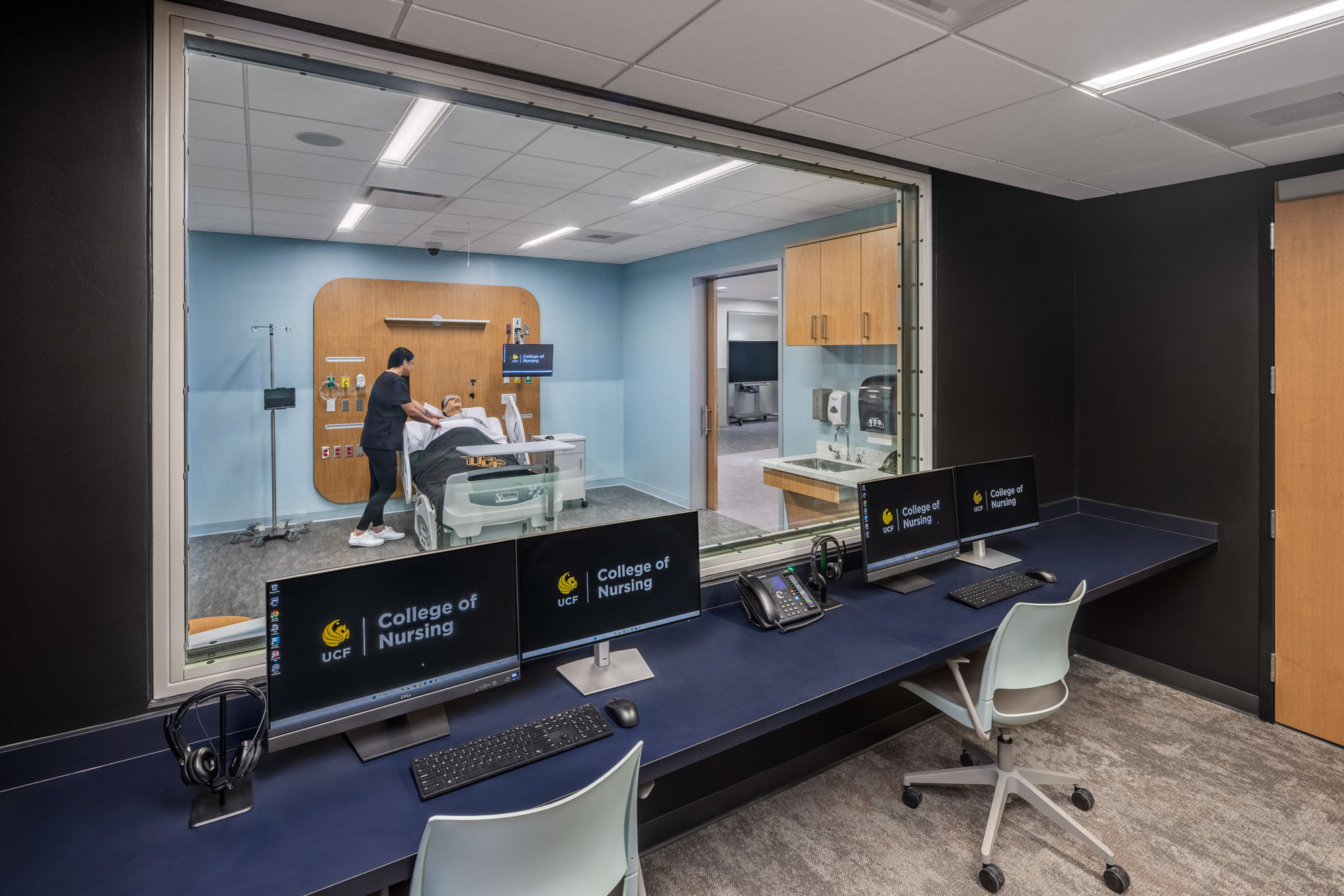
A simulation observation room allows faculty members to lead a wide variety of immersive training exercises.
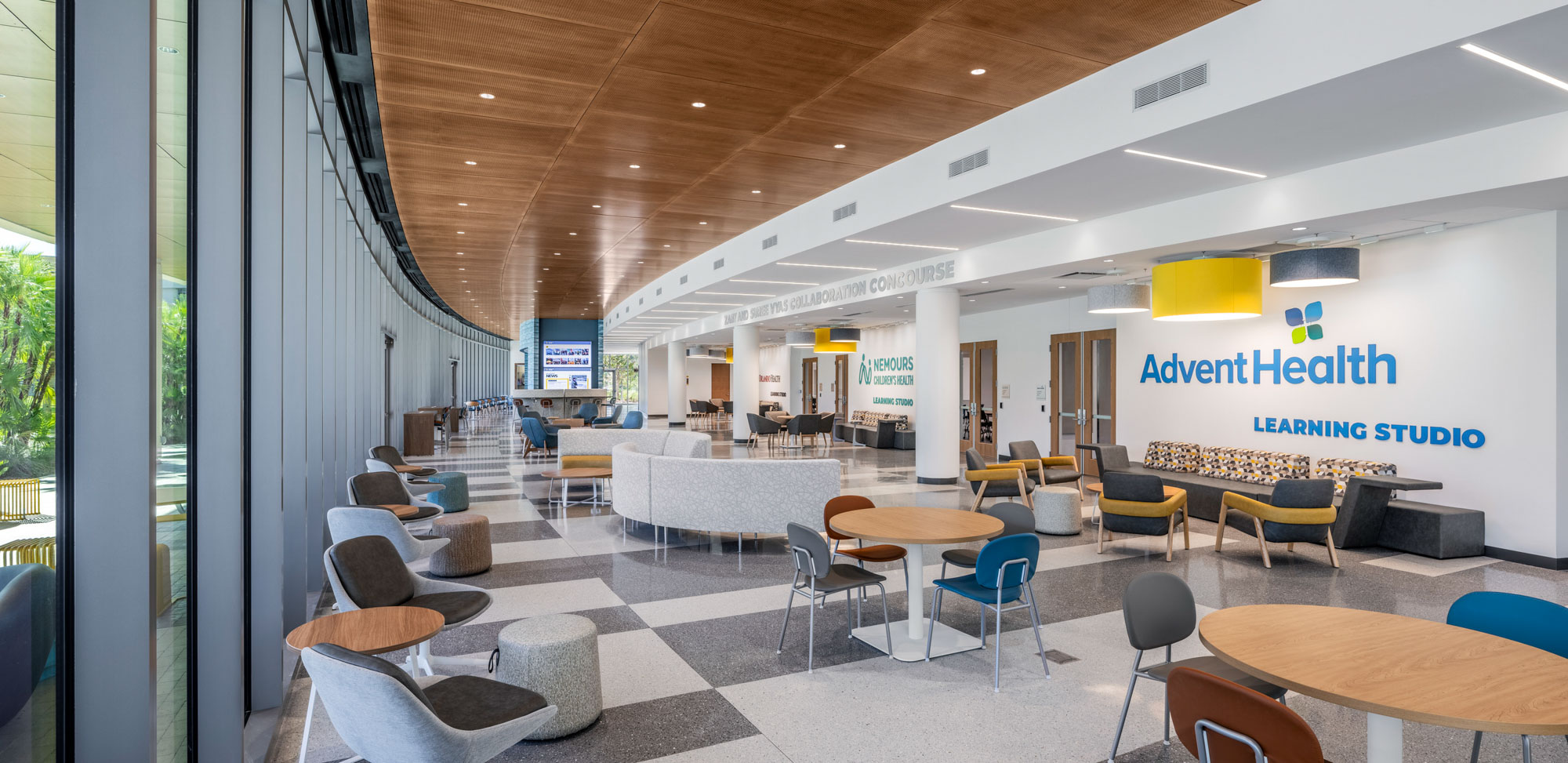
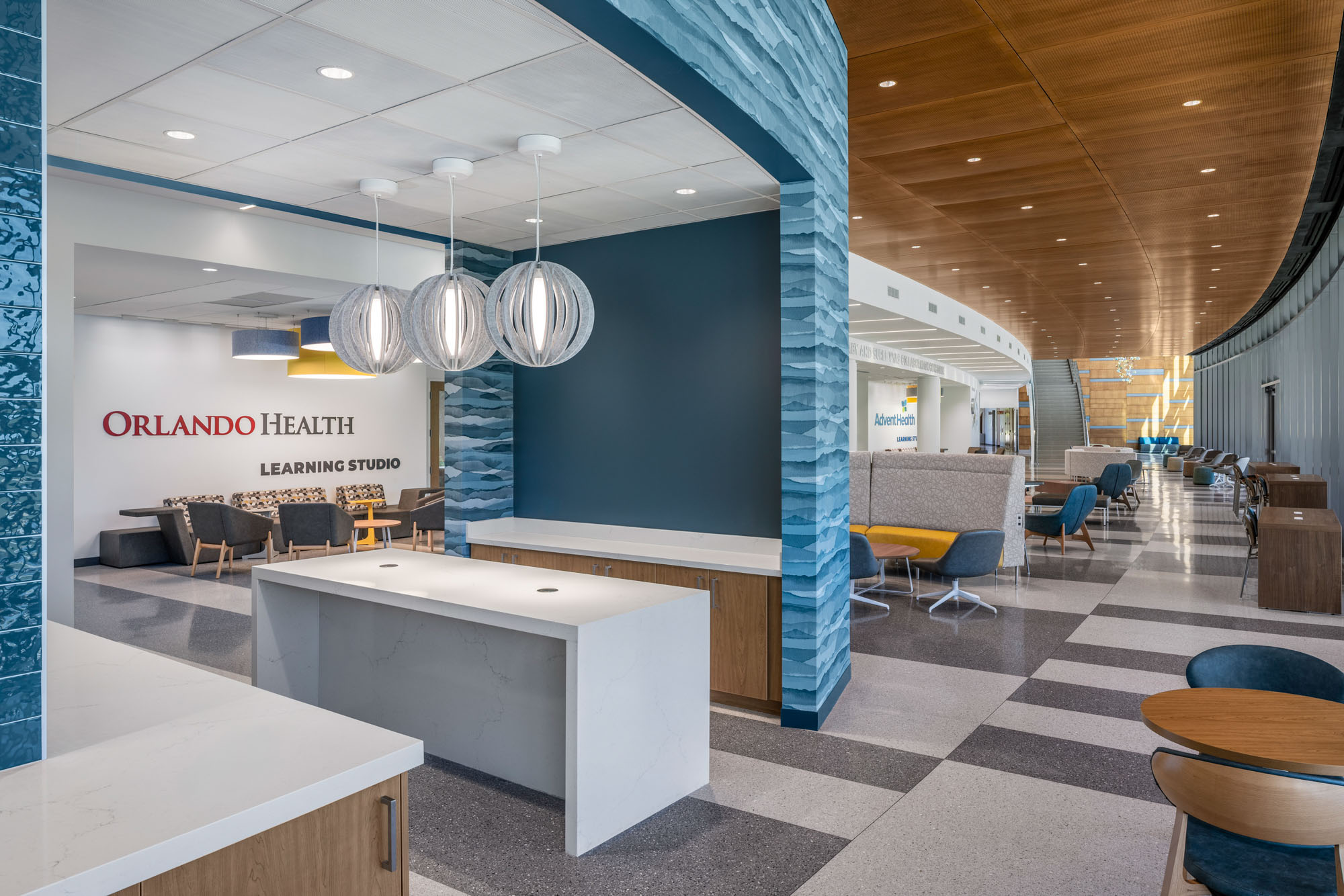
Additional learning environments include a study cafe, a student success suite, a maker space where faculty and students can test and prototype 3D-printed tools and teaching aids, and a media studio where faculty can record lessons or tutorials for asynchronous learning or in-class review.
Partners
Hunton Brady Architects – Architect of Record
Next Project
UT Medical Nursing Building
University of Tennessee, Knoxville