This site uses cookies – More Information.
Dragun Building Renovation and Addition
Anne Arundel Community College
A transformative renovation upgrades a mid-century academic space to support modern-day learners.
Location
Arnold, Md
Size
55,000 GSF
Sustainability
LEED Gold (pending)
Services
Completion
2028
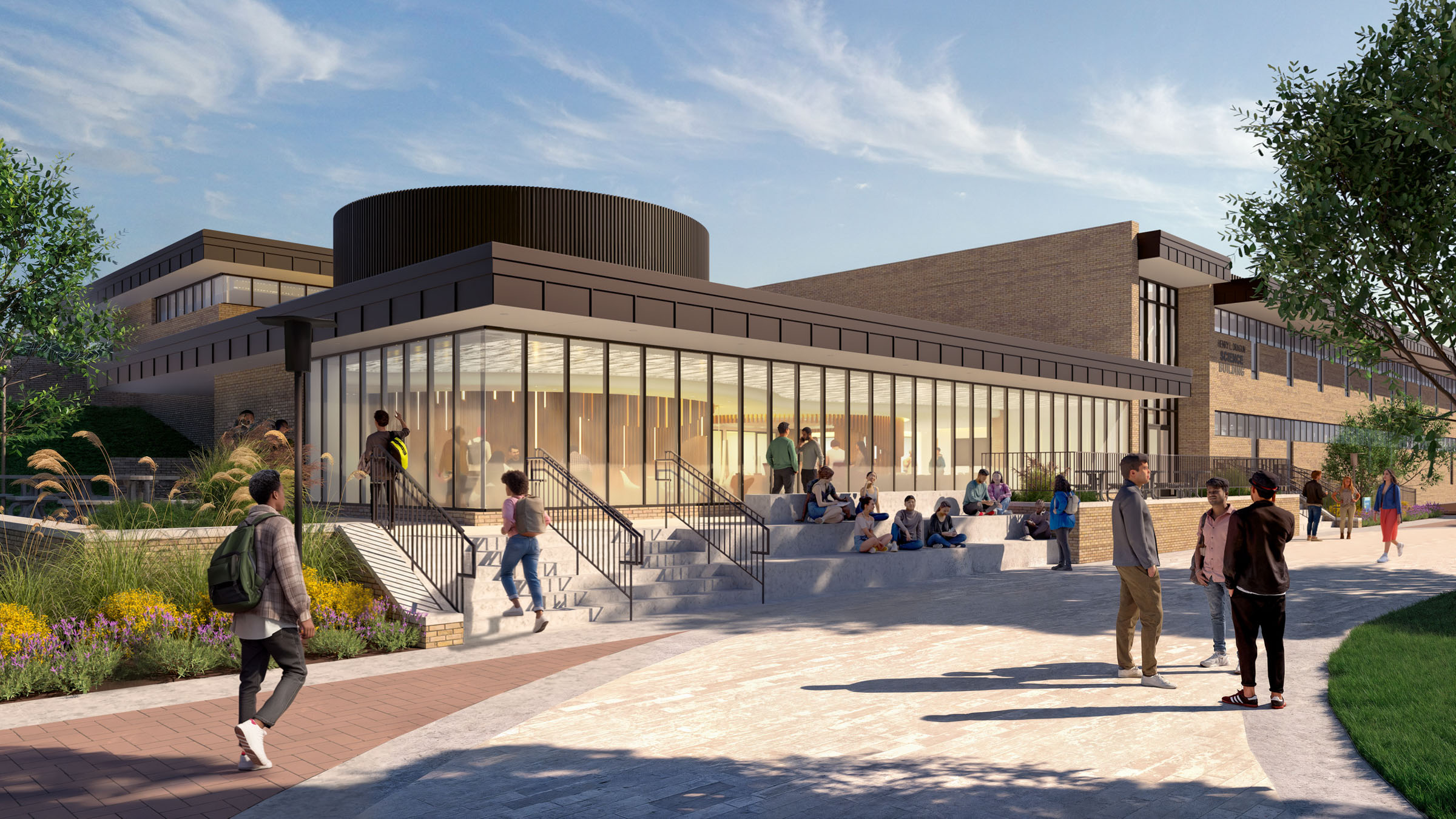
The Dragun Science Building Renovation at Anne Arundel Community College reimagines a mid-century era academic facility to meet the demands of next-generation learners. Originally built in 1967, the Dragun Building sits centrally on the Anne Arundel campus and will house the college’s chemistry and physics departments, as well as active learning classrooms, offices, student huddle rooms, and open collaboration spaces. The renovation will reprogram and optimize the space with a focus on the student experience, flexible instructional spaces, and updated infrastructure, while also enhancing the exterior appearance to better fit the larger evolving campus context.
The existing facility had several space challenges including poorly proportioned labs, inadequate lab prep and storage areas, entirely outdated building systems, and a generally dark and unwelcoming environment. The renovation of Dragun embraces the mid-century modern aesthetics while creating a light, welcoming, and connected environment that enhances wayfinding and student collaboration.
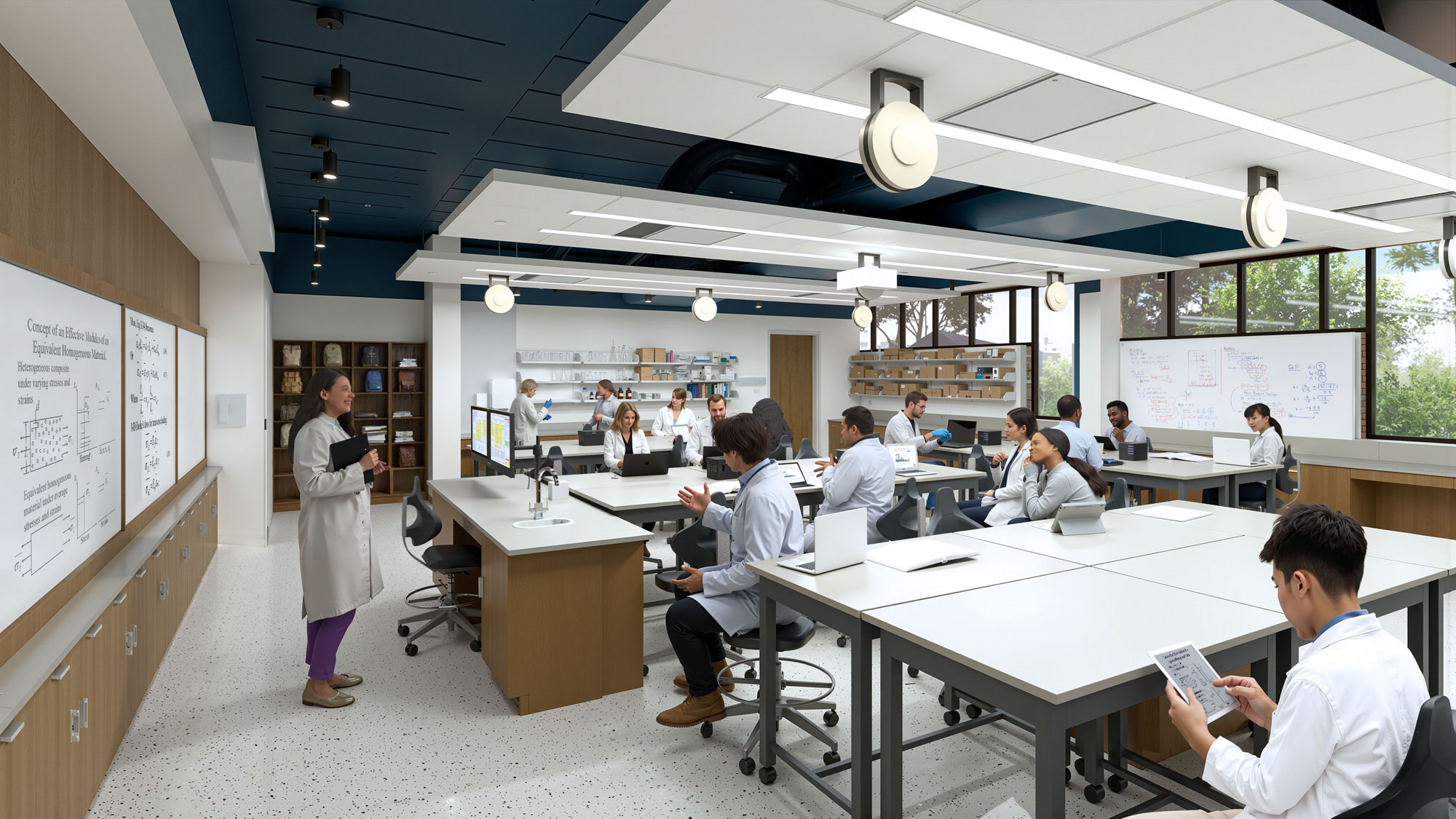
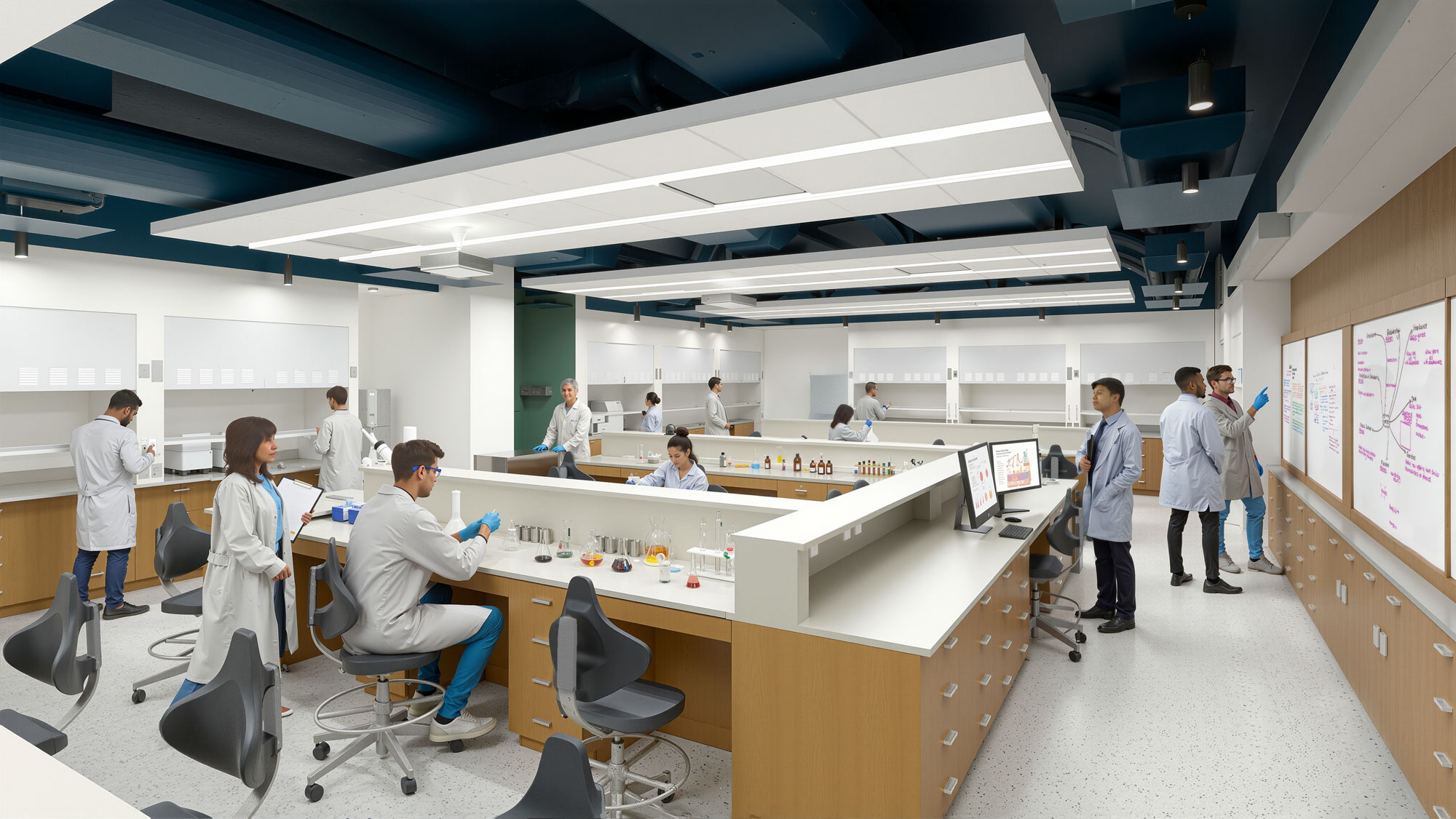
New, state-of-the-art science teaching labs are designed to improve energy efficiency, safety, and accessibility, while also enabling modern, hands-on, student-focused teaching pedagogies.
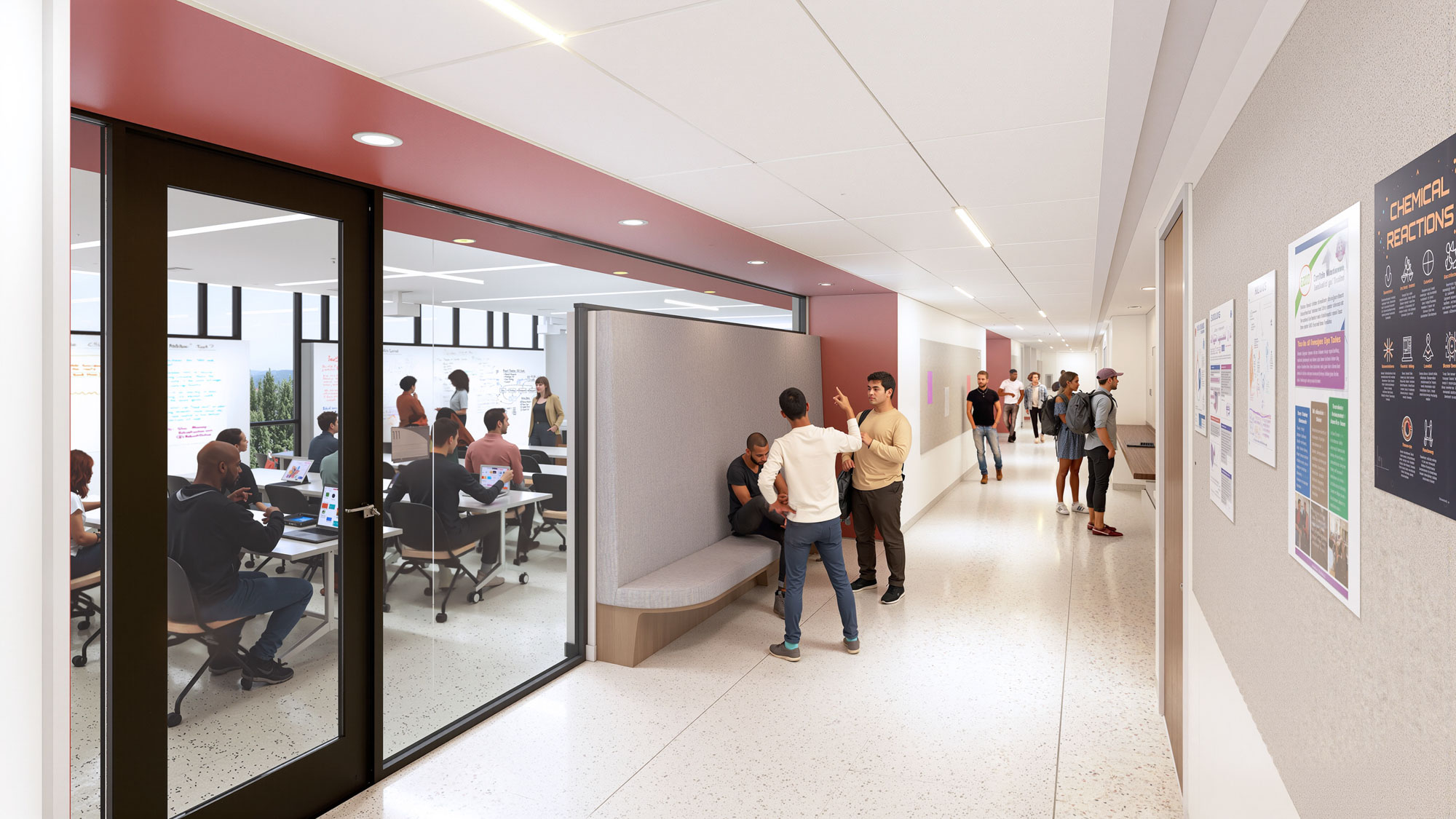
A collaboration “sandbox“ and a 50-seat instructional planetarium will serve as a sculptural centerpiece of the renovated building and an important anchor for the science quad. The immersive, high-fidelity teaching environment will enable new engagement opportunities, including community-friendly educational programs and events. Exterior and interior open gathering spaces will provide much-needed respite and study areas for the college’s commuter student population.
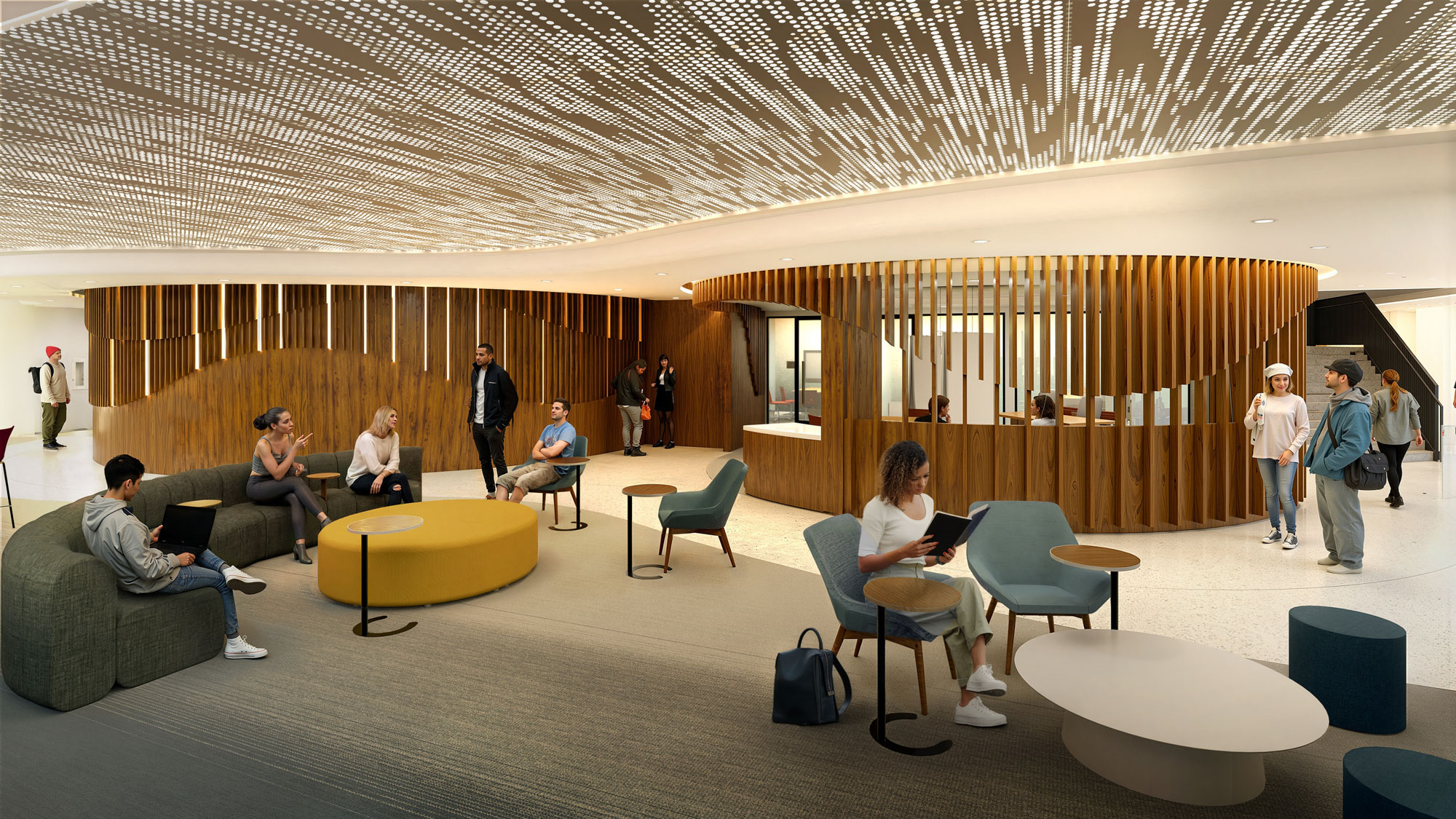
The renovation of Dragun will improve functionality by relocating significant structural elements to maximize faculty-to-student interaction, improve sightlines, and clear circulation. A new mechanical penthouse will add needed height and scale to complement the adjacent Health and Life Sciences Building, while also improving the maintenance and lifecycle of the building’s HVAC systems.
The collaborative design process has enabled the college to take notable strides toward reducing the campus’ carbon footprint. The design team incorporated green chemistry principles into the design and curriculum by reducing storage and use of hazardous materials for teaching, decreasing the number of room air changes per hour in labs through the safe reduction of fume hood exhaust flow rates, and eliminating the use of natural gas at the student bench.
As a result of this renovation, Ayers Saint Gross has been asked to perform a campus-wide electrical load study that will outline future strategies the college can take to reduce, if not eliminate, their reliance on fossil fuels. This effort aligns with Maryland’s Climate Solutions Now Act, which aims to reduce greenhouse emissions. The project is anticipated to exceed the minimum LEED certification requirement by achieving Gold, aiming for a 14% reduction in energy use compared to ASHRAE baseline standards.
Next Project
Camp Renovations
Hole in the Wall Gang Camp